YACANA · EXPEDITION DOSSIER · PICO DE ORIZABA LAT 19.0306°NLON 97.2683°W
Pico de Orizaba · Citlaltépetl

Mexico's
highest
point.5,636 m / 18,491 ft

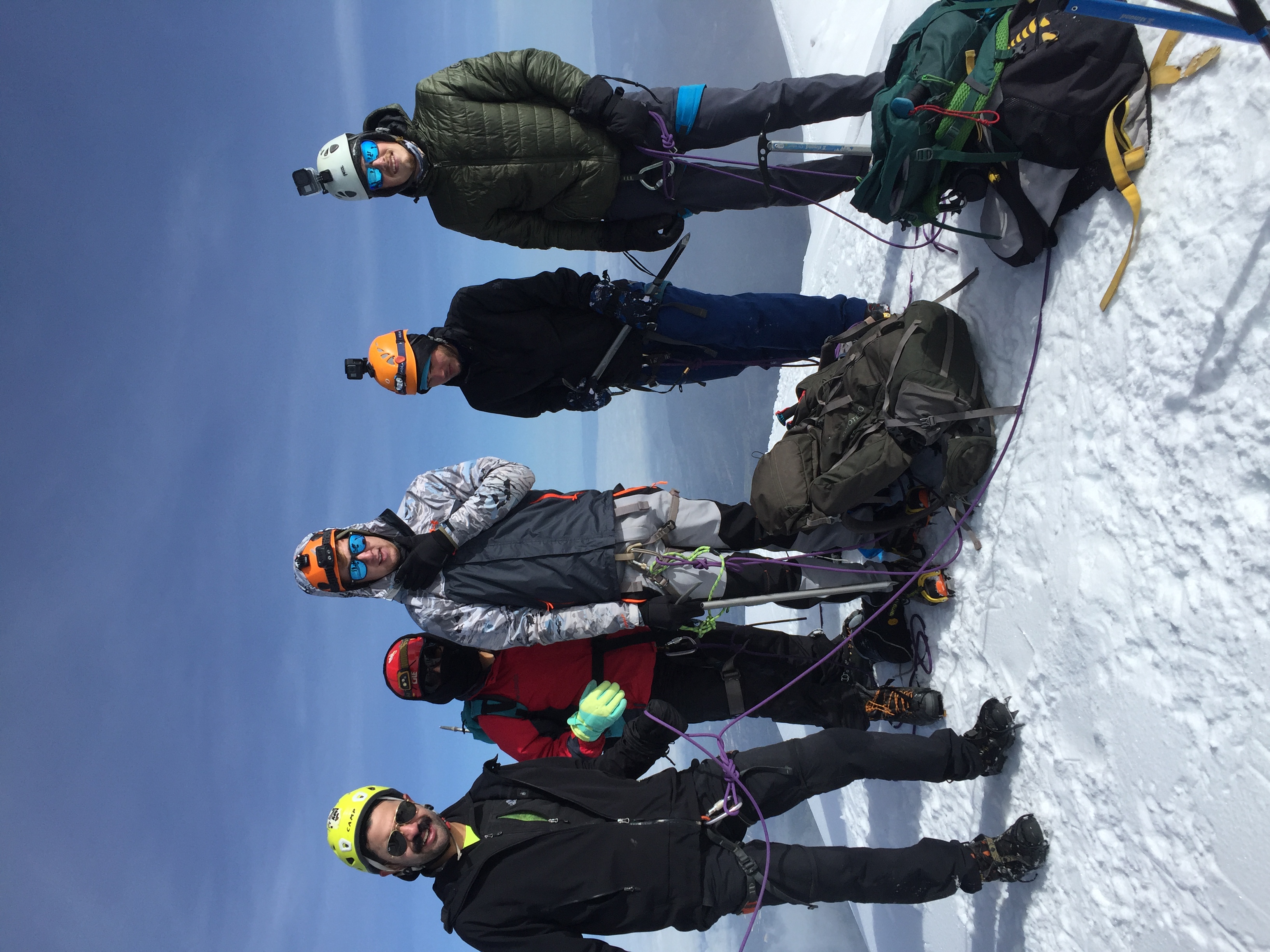
Two-day glacier expedition. Crampons, ice axe, rope. You climb in the dark. You summit at sunrise. Real alpinism — taught from the trailhead up.

  • Duration2 days
  • Difficulty4/5 advanced
  • Elev. Gain1,376 m
  • Distance8 km RT
  • Tech.Glacier
  • SeasonNov — Mar

What you're really signing up for.

"This is the mountain that turns hikers into mountaineers. The cold is sharp. The thin air is relentless. But the route is fair."

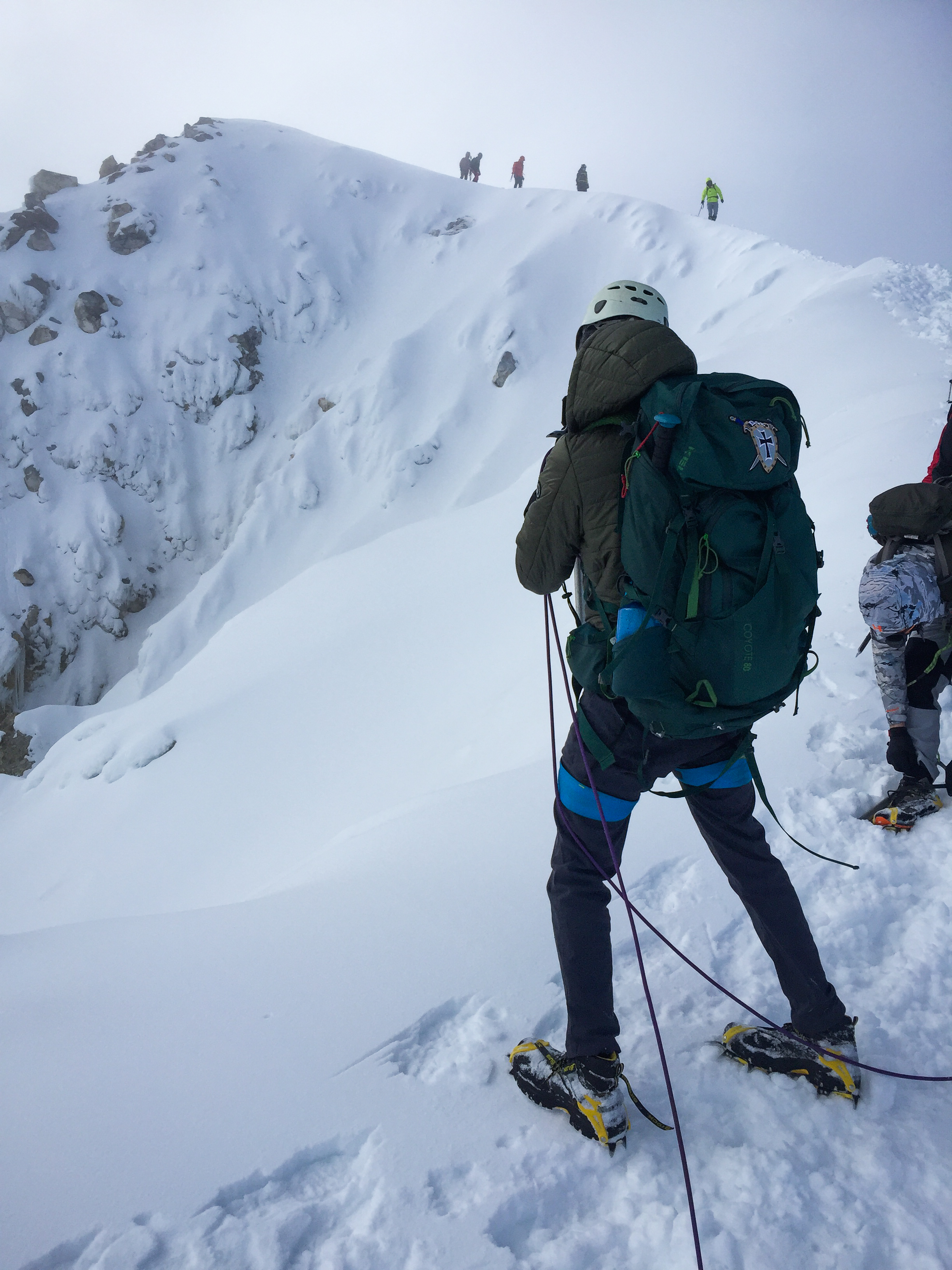
Pico is a glacier climb, not a high-altitude hike. You'll rope up. You'll wear crampons. The Jamapa glacier is steep in places — manageable with proper technique, which we teach as we go.

The two real challenges are altitude and cold. Starting the summit push at 1am from 4,260m is no joke. Quality boots, gloves, and a layering system aren't optional — they're the difference between summit and turnaround.

Most fit climbers who've spent a few days in Mexico City and done a warm-up hike like Ajusco, Malinche, or Nevado de Toluca will summit. The ones who don't almost always skipped acclimatization, didn't train enough, or underestimated the cold. Be honest with yourself on all three.
Every meter, plotted.

From CDMX pickup at 2,250m to the summit crater at 5,636m — the altitude curve of a typical Yacana expedition.

6000m5000m4000m3000m2000m
CDMX 2,250m
Piedra Grande 4,260m
SUMMIT 5,636m
06:00 D111:0015:0020:0001:00 D207:0011:0019:30
Descent Ascent Above 5,000m

Hour by hour.

06:00D1 · CDMX
2,250m · pickup
Departure from your accommodation
Ricardo or Cristino picks you up. Bags loaded. We drive east toward Tlachichuca, Puebla.
10:00Tlachichuca
2,650m · breakfast
Hearty breakfast, meet the 4x4 team
Mexican breakfast. Last hot meal at low altitude. The 4x4 drivers brief us on the road.
13:00Piedra Grande
4,260m · arrival
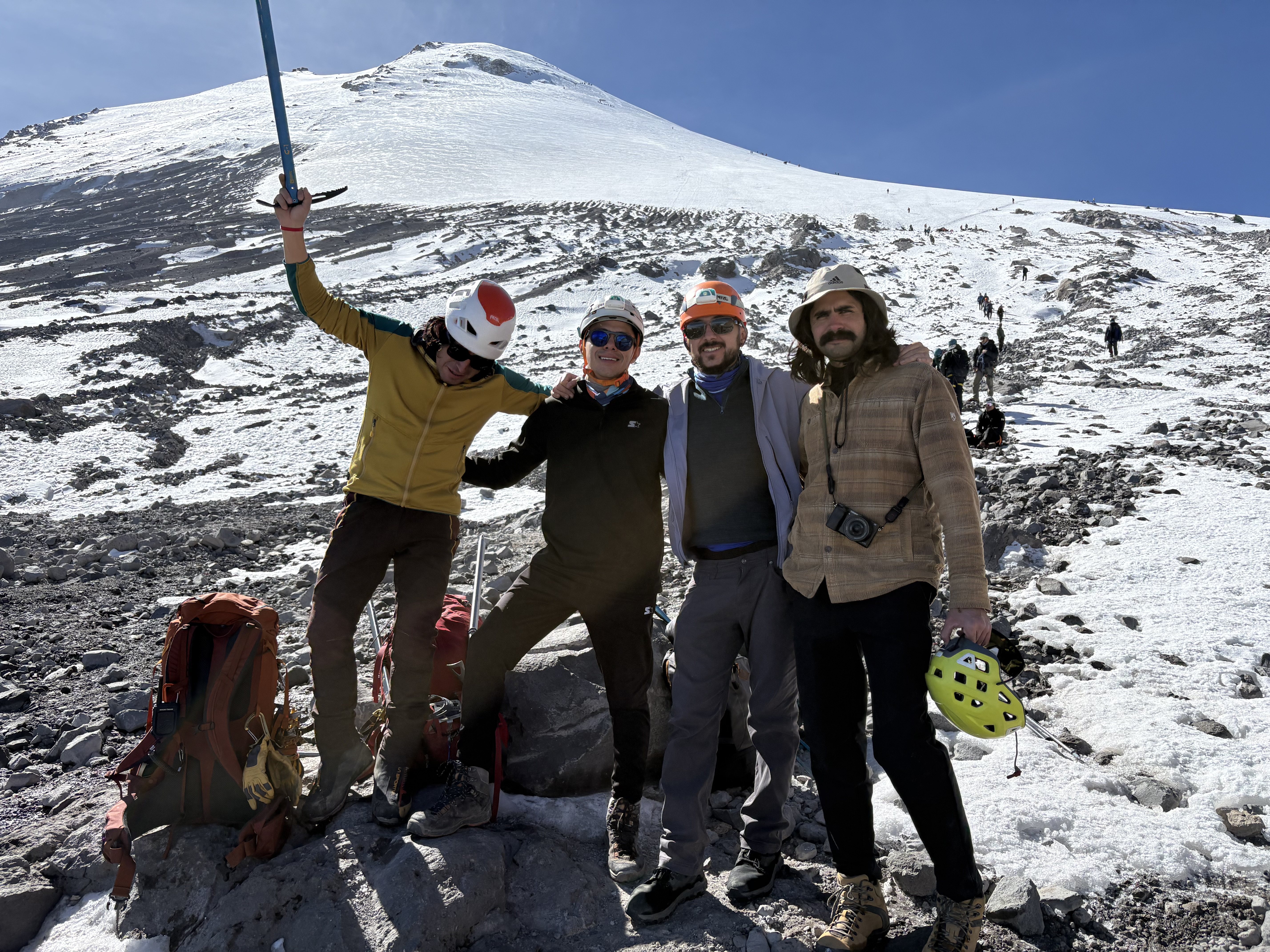
Arrive at the refuge
Bumpy 4x4 ride done. First taste of high altitude. Bunks assigned. Drink water, slow down.
15:00Refuge
4,260m · briefing
Trip overview & equipment fitting
We walk through the route, the timing, what to expect. Crampons get fitted to your boots, harness sized, ice axe in hand. Time to ask everything.
19:00Refuge
briefing · lights out
Final gear check, then sleep — if you can
Last equipment inspection. Cristino walks the summit route on a map. Lights out at 19:00. Wake call at 01:00.
01:00D2 · Refuge
4,260m · -5°C
Wake. Coffee. Layer up.
Light breakfast, hydrate, every layer on. We rope up outside the refuge.
02:00Glacier toe
4,800m
Crampons on. Rope up.
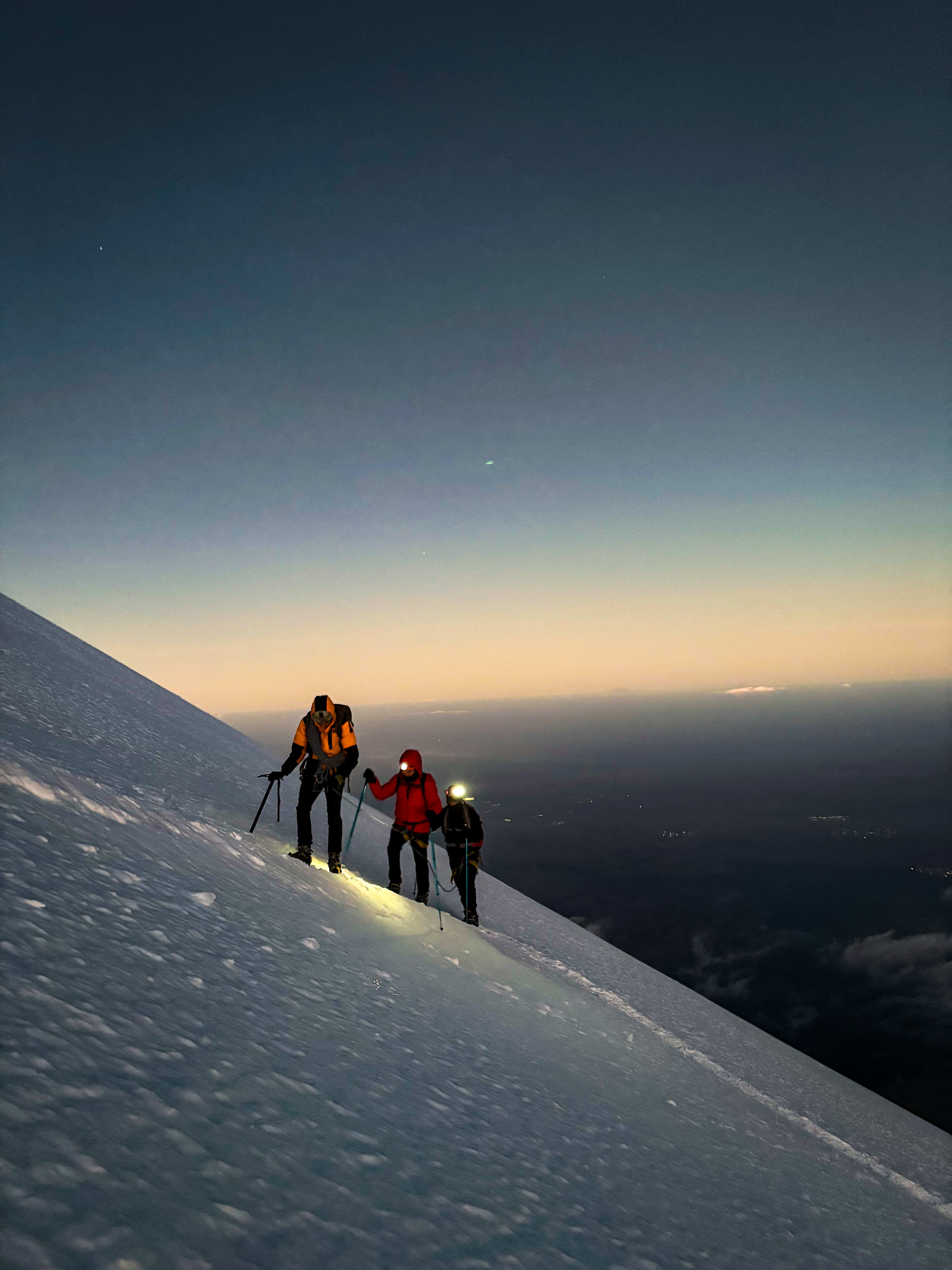
We step onto the Jamapa glacier in the dark, headlamps only. Steady pace. We teach footwork and pacing as we go.
05:30Upper slope
5,400m · -10°C
Steep section — the hardest hour
Sky lightens. Wind picks up. Every breath is half-air. This is where Pico tests you.
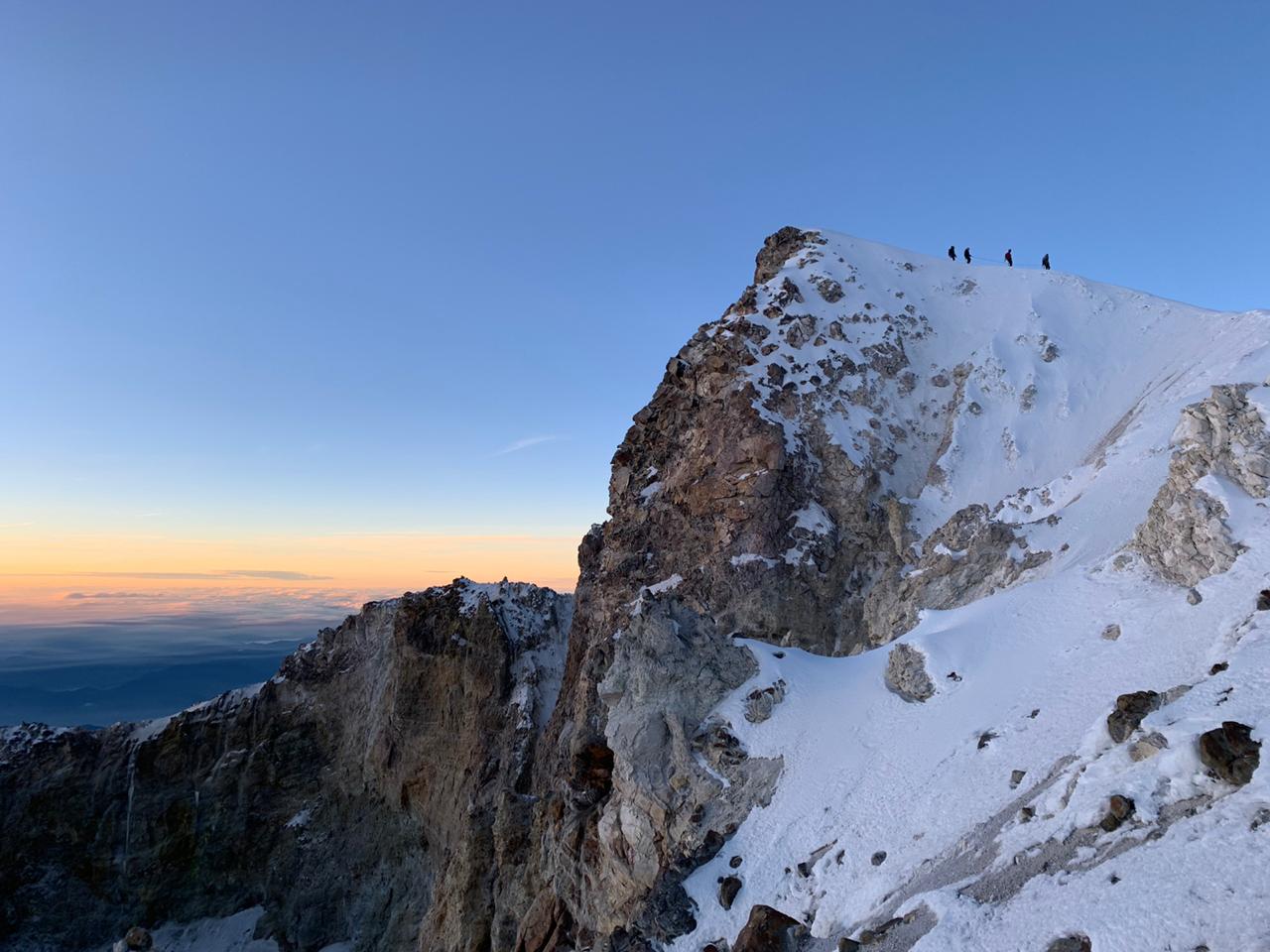
06:50Summit
5,636m · sunrise
Top of Mexico
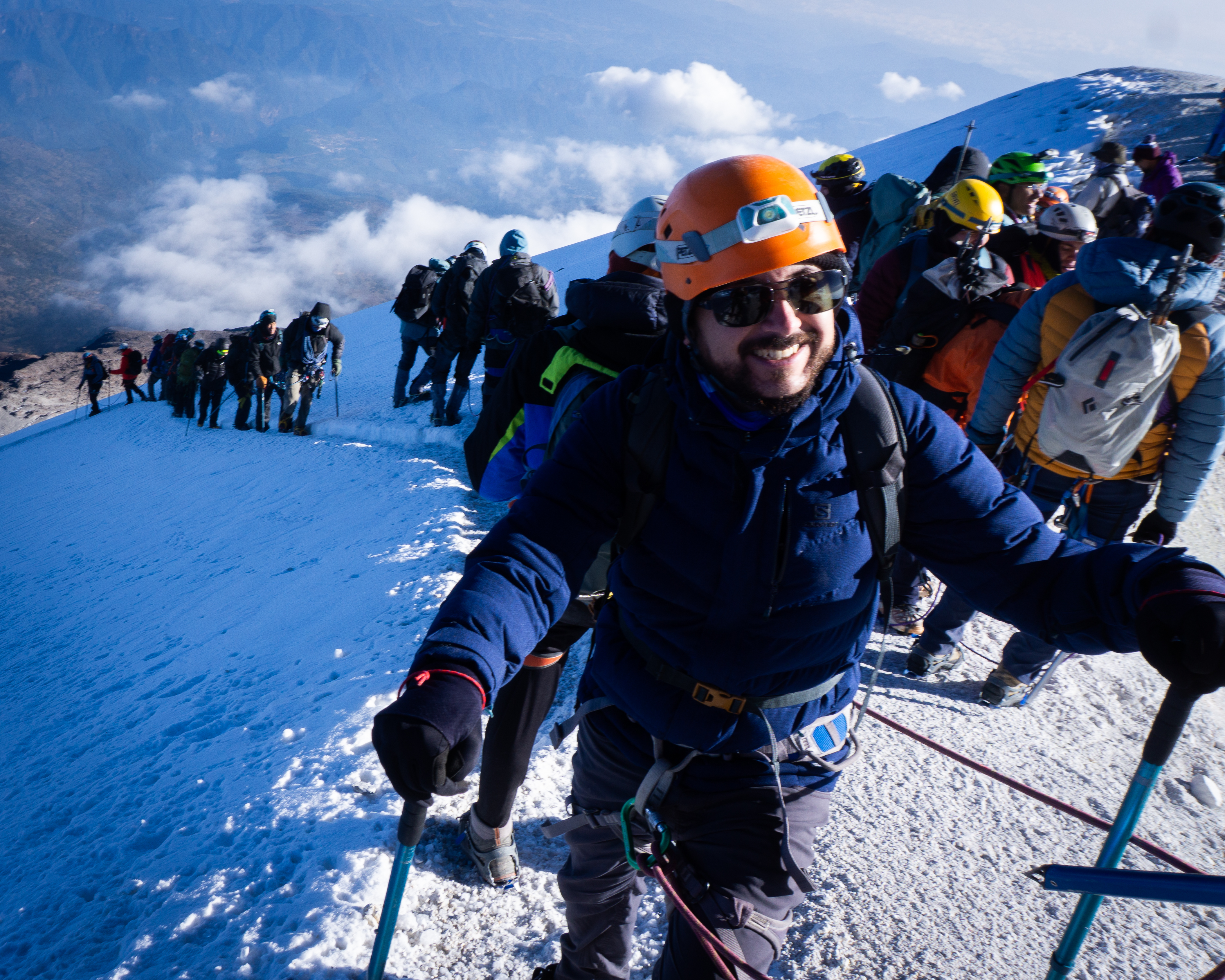
Crater rim. First light hits the snow. You can see for hundreds of kilometers. 15 minutes of pure quiet, then we descend.
11:00Refuge
4,260m
Back to Piedra Grande
Tired legs. Pack up. Quick meal.
15:00Tlachichuca
2,650m · lunch
Celebration lunch
Real Mexican food. Cold drinks. Summit stories.
19:30CDMX
2,250m · dropoff
Home.
Drop-off at your accommodation. Sleep is going to be excellent tonight.
// A note on timing · These are typical times. Actual pace varies with group fitness, weather, snow conditions, and how the day unfolds. Your guide adjusts as needed. Some groups summit earlier. Some take longer. The plan flexes to match the climbers.

What to bring, what we provide.

For Pico, gear is not optional flair — it's the line between summit and turnaround. Two columns: yours, ours. Need to rent personal items? We'll arrange it.

You bring

PERSONAL
  • Mountaineering bootsRigid sole, crampon-compatible, rated to -15°C.
  • Base layer (top + bottom)Merino or synthetic. No cotton.
  • Mid layer fleece200–300 weight. Full zip preferred.
  • Insulated puffy jacketDown or synthetic. -10°C-rated.
  • Hardshell jacketWind- and waterproof. Hood required.
  • Climbing pantsSoft-shell. Insulated bibs recommended for summit.
  • Insulated summit glovesRated to -15°C. Plus liner gloves.
  • Warm hat + glacier sunglassesBeanie or balaclava. Cat. 4 sunglasses, side shields.
  • Backpack 35–40LFor summit push. Refuge stores your main bag.
  • Sunscreen + lip balm SPF 50Personal medications, hand/toe warmers (recommended).

We provide

INCLUDED
  • CramponsFitted to your boots at the refuge.
  • Ice axeSized to your height.
  • Climbing helmetMandatory above 4,800m.
  • Harness + locking carabinersFor glacier travel and rope teams.
  • Dynamic rope (per team)30m, glacier-rated.
  • HeadlampIf you don't have one. Spare batteries included.
  • Trekking polesCollapsible, with snow baskets.
  • Garmin inReach beaconLive GPS tracking + emergency SOS.
  • Group first-aid + altitude medsIncluding high-altitude pharmacy.
  • All meals + refuge accommodationTlachichuca breakfast through CDMX dropoff.
  • Round-trip transport from CDMXIncluding 4x4 to Piedra Grande.

// Personal gear rentals · Need to rent boots, a puffy, gloves, or a sleeping bag? Tell us when you book and we'll arrange it through our partners in CDMX or Tlachichuca. Reserve 7+ days out so sizing works.

What it's like up there right now.

Modeled summit conditions, refreshed when this page loads. Rounded estimates — we use this same data alongside on-site verification to call go/no-go each morning.

Modeled
Summit Temp
Loading…
Modeled
Summit Wind
Loading…
Modeled
Today's High / Low
Loading…
Modeled
Climbing Window
Loading…
Sunrise on Summit
We aim to put you on the rim 5–10 min before.
Snowpack Status
Verified day-of
Glacier conditions confirmed by your guide morning of summit.
Data: Open-Meteo · ECMWF model · Modeled summit estimates, not station-measured.

What people say after they climb with us.

Verified reviews from Yacana climbers across our expeditions. 50+ five-star reviews on TripAdvisor — here are three.

★★★★★
"Cristino is the best, most experienced guide you could ask for."

We had an amazing time. Cristino goes above and beyond — just a genuinely warm person. Super well-organised: transport, food, technical gear. Everything is arranged perfectly. We would definitely do it again.

Julie S.via TripAdvisor
★★★★★
"Didn't summit. Would still book them again."

Couldn't recommend Yacana more. These guys were professional, super prepared, and delivered a memorable experience. I didn't reach the summit due to altitude sickness, but I'd still use this group again if I return for a second attempt.

Frank S.via TripAdvisor
★★★★★
"One of the toughest hikes I've done. They took great care of us."

Cristino took great care of us, helping set up tents, cooked, and more importantly motivated us even when we felt discouraged halfway. Wonderful experience overall. I would recommend doing it with this company.

Shawnleetchvia TripAdvisor

Pricing.

Most Pico expeditions run 2–4 climbers. Bigger groups get a discount.

Deposit — 35% secures your guide and date.

Balance — 65% due at the END of your trip.

Cancel — 14+ days out: full refund. Inside 14 days: no refund.

Cards — +5% bank fee on remainder. Cash welcome.

Solo climberUSD$1,075
2–4 climbers MOST COMMONUSD$695/pp
5+ climbersUSD$625/pp
Included Round-trip transport from CDMX · English-speaking certified guide · refuge accommodation · all meals · technical gear (crampons, ice axe, helmet, harness, rope) · park fees · live GPS tracking · emergency satellite comms.

The questions everyone asks.

No, but you need solid fitness and recent hiking experience. We recommend at least 1–2 days in CDMX (2,250m) to acclimatize, plus a warm-up like Ajusco, Malinche, or Nevado de Toluca. We teach the technical skills (crampon, ice axe, rope work) as we go.
If you can run 10K comfortably and hike 8–10 hours with elevation gain carrying a loaded pack, you're ready. Cardiovascular fitness gets you up the mountain, but leg strength matters just as much — you'll be moving uphill at altitude carrying gear. Train 2–3 months out: long hikes with weight, plus running or cycling.
Real concern at 5,000m+. Spend at least 1–2 days in CDMX (2,250m) before, and do a warm-up to 4,000–4,700m (Ajusco, Malinche, or Nevado de Toluca). We monitor everyone during the Day 1 acclim period at the refuge. Tell your guide immediately if you feel a headache, nausea, or dizziness.
Summit temps typically range -5°C to -15°C, with wind chill making it feel colder. The 1am start from the refuge is the coldest hour. Boots rated to -15°C and quality insulated gloves matter. Once the sun comes up around 7am, it warms up quickly.
Your lead guide calls it. If conditions are unsafe — high winds, whiteout, extreme cold — we delay or cancel the summit push. Safety first. We'll do everything possible to give you a summit attempt, but sometimes the mountain says no.
Around 80% for fit, properly acclimatized climbers. The ones who don't summit almost always skipped the warm-up, didn't train enough, or underestimated the cold.
Yes. Tell us when you book what you need — boots, puffy, gloves, sleeping bag — and we'll arrange rentals through our partners in CDMX or Tlachichuca. Reserve 7+ days out so sizing works. We provide all technical gear (crampons, ice axe, rope, helmet, harness) at no charge.
Unreliable above the refuge. We carry satellite comms for emergencies and provide live GPS tracking so your family can follow you in real time. Plan to be offline for the climb.
Maximum 2:1 climber-to-guide ratio for Pico (it's technical — glacier travel requires it). Most expeditions are 2–6 climbers total. Smaller groups mean more personalized attention and better summit chances.

Let's climb.

Tell us when you're coming. We'll handle the rest.