How to Train for Pico de Orizaba, Iztaccihuatl and Ajusco: The Plan We Send Our Clients
You do not need to be an athlete to climb these volcanoes. You need to be able to walk uphill, with a pack, for a long time, at a pace you could talk at, and feel well enough to do it again the next day. That is a specific ability, and it is not the one most gyms build. This is the plan we send when a client asks what to do to train. It is one page because nobody follows five, it is built on what the training and altitude research actually shows, and it is the same weekly skeleton I train on myself.
Written by Ricardo Guaderrama, professional mountain guide and founder of Yacana Outdoors. This is what we ask of our clients and what I do in my own week, with the studies it rests on listed at the end. It is not medical advice: if you take medication or have a heart or lung condition, talk to a doctor before you start.
Go straight to your mountain:
Ajusco and La Malinche: 4 weeks Iztaccihuatl: 8 weeks Pico de Orizaba: 12 weeksRead the first two sections anyway. The plans only make sense once you know what the day asks.
1. What summit day actually asks of you
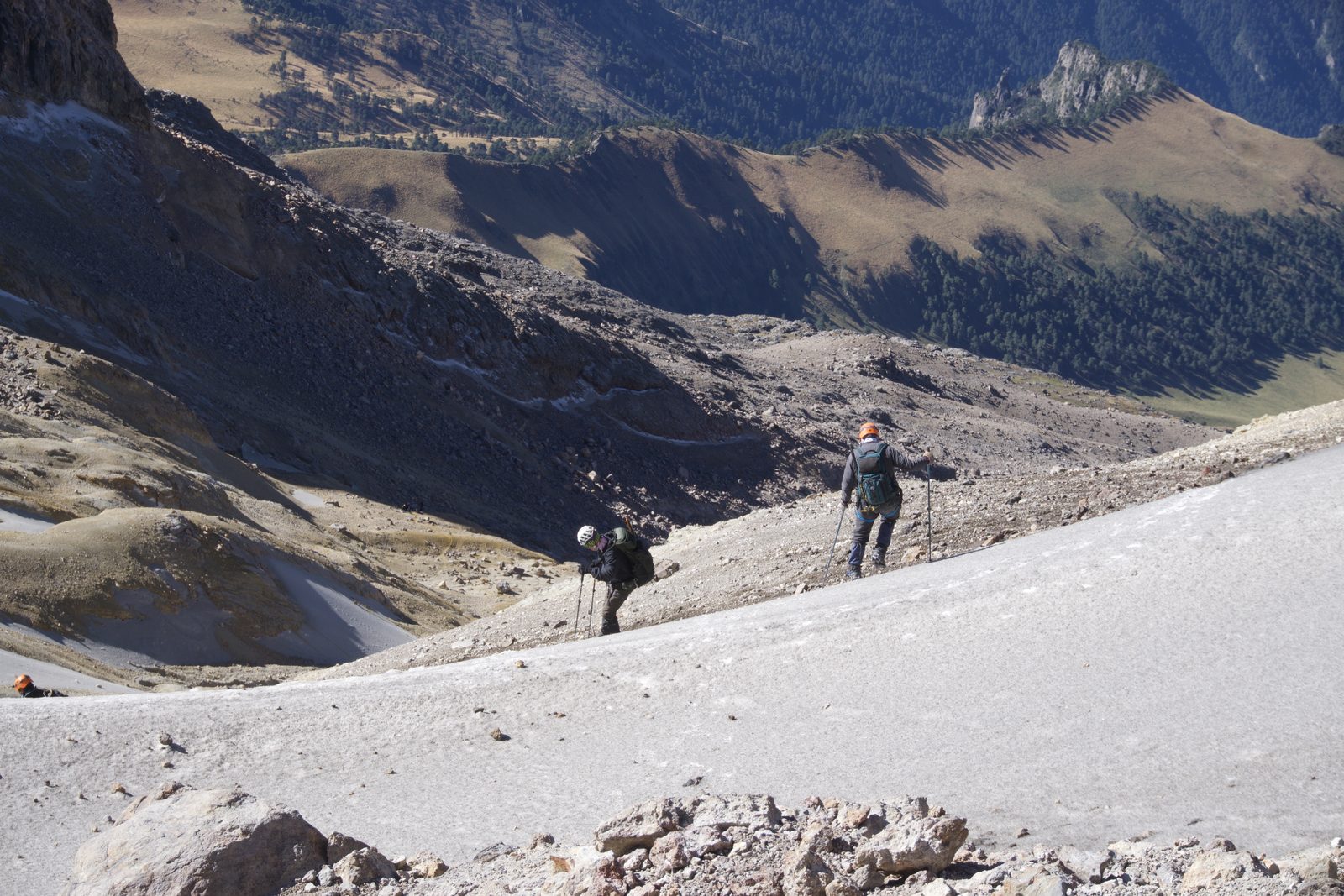
Three mountains, three very different days. Here is what each one asks, in the units that matter for training: hours on your feet, metres of climbing, and how high you are while you do it.
| Mountain | The day | Climbing | Hours on your feet |
|---|---|---|---|
| Ajusco Pico del Aguila, 3,880 m |
Half a day, starting at 3,300 m. The first rung for most of our clients. | About 580 m | 3 to 4 |
| Iztaccihuatl 5,230 m |
Two days. Walk up to camp at 4,700 m, leave for the summit before dawn, then walk all the way down. | About 1,250 m over 16 km, plus the full descent | 8 to 10, two days in a row |
| Pico de Orizaba 5,636 m |
Three days. Summit day starts around midnight from the hut at 4,260 m: rock in the dark, then the glacier for hours. | About 1,375 m | 6 to 9 up, 3 to 4 down |
Notice what is not in the table: speed. Nobody runs up these mountains, and on the glacier we walk slowly on purpose. What every one of these days has in common is time on your feet, going uphill, carrying weight, and then a long descent on legs that are already tired. That is the thing to train. A fast 10K is nice to have. It is not this.
The second thing to notice is where the hard part sits. On Orizaba the climbing does not get steeper near the top; the air gets thinner. The client who turns around at 5,200 m is rarely unfit. They reached the glacier with nothing in reserve, and there were still four hours to go. For these mountains, fitness means reserve: being at 60 percent effort after five hours, not at 95.
2. The four sessions that build a mountain
Every plan below is built from the same four sessions. If you already exercise three to six times a week, and most of our clients do, you are swapping sessions, not adding them. This is what the week looks like:
Mon
Strength
40 min, legs and core
Tue
Easy aerobic
45 to 60 min, talking pace
Wed
Rest
Or a walk
Thu
Hills or stairs
45 to 60 min, pack on
Fri
Rest
The full one
Sat
Easy
Optional. For Izta, a 90 min hike
Sun
The long uphill day
2 to 6 hours with a pack. The session that builds the mountain
Move the days around to fit your week. What cannot move: the long day gets a full day before it that is easy or empty, and a full day after it.
1. The long uphill day. Once a week, on the weekend. This is the only session that actually builds the mountain, and it is the one people skip because it takes a whole morning. Walk uphill for a set number of hours with a pack, at conversation pace, and walk back down. Hills and trails if you have them; if you do not, see section 8. Everything else in the week exists so you can do this one well. It is the spine of every serious mountaineering training system, from the military load-carriage literature to the Uphill Athlete method[7, 10].
2. The hill or stair session. Once a week, midweek, 45 to 60 minutes. Repeated climbs of one hill, one stairwell, or a treadmill at a steep incline, with the pack on. It builds the specific muscles, and it teaches your body the one thing it will do for nine hours: keep stepping up.
3. The easy aerobic session. Once or twice a week, 45 to 60 minutes of running, cycling or swimming at a pace where you can talk in full sentences. This is the engine. Most of our clients already have one. If you run or ride regularly, do not add more of this; it is not the bottleneck.
4. Strength. Once a week, 40 minutes, legs and core. Adding one heavy or explosive strength session to an endurance week improves movement economy, which is the polite way of saying you spend less energy per step[5]. Four movements cover it. The step-down matters as much as the step-up, because the descent is where legs fail: three to four hours down Orizaba on tired quads is what people remember the next day, and a few weeks of controlled downhill work before the trip cuts that damage roughly in half[8, 9].
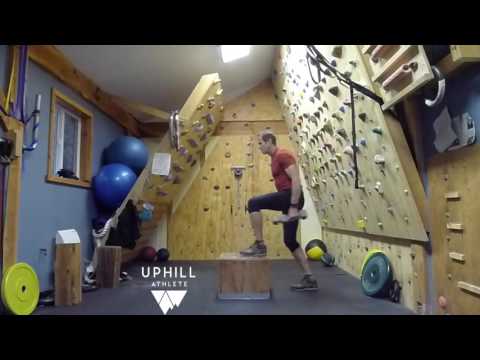
01 · Up
Box step-up
Pack on, box at knee height. Drive through the whole foot, stand tall on top, and lower yourself with control instead of dropping. 3 sets of 10 to 15 per leg. Add weight before you add reps.
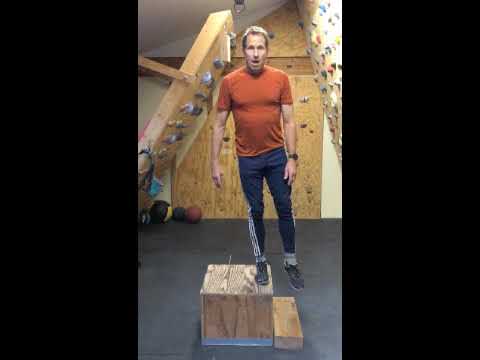
02 · Down
Box step-off
Stand on the box on one leg and lower the other foot to the floor slowly, three seconds down, knee tracking over the toes. This is the descent, rehearsed. 3 sets of 10 per leg, body weight first.
03 · One leg at a time
Split squat
Long stance, back knee to just above the floor, hips over the front foot. The back leg is for balance only. 3 sets of 8 to 12 per side. Progress by putting the rear foot on a bench, then by adding the pack.
04 · The ones nobody trains
Calf raises and core
Calf raises on a step, full range, slow on the way down, 3 sets of 15 to 20. Nobody trains calves and everybody uses them for nine hours. Finish with 10 minutes of core: planks, side planks, dead bugs. The pack rides on it.
Two rules that matter more than any exercise. One full rest day a week, and the day after the long one is easy or nothing: you do not get fitter on the day you train, you get fitter recovering from it. And nearly every session is done at a pace you could talk at. Elite endurance athletes converge on roughly 80 percent easy and 20 percent hard, and the hard part is not what gets you up a volcano[4]. A client who has trained only fast has trained a gear they will never use on the mountain.
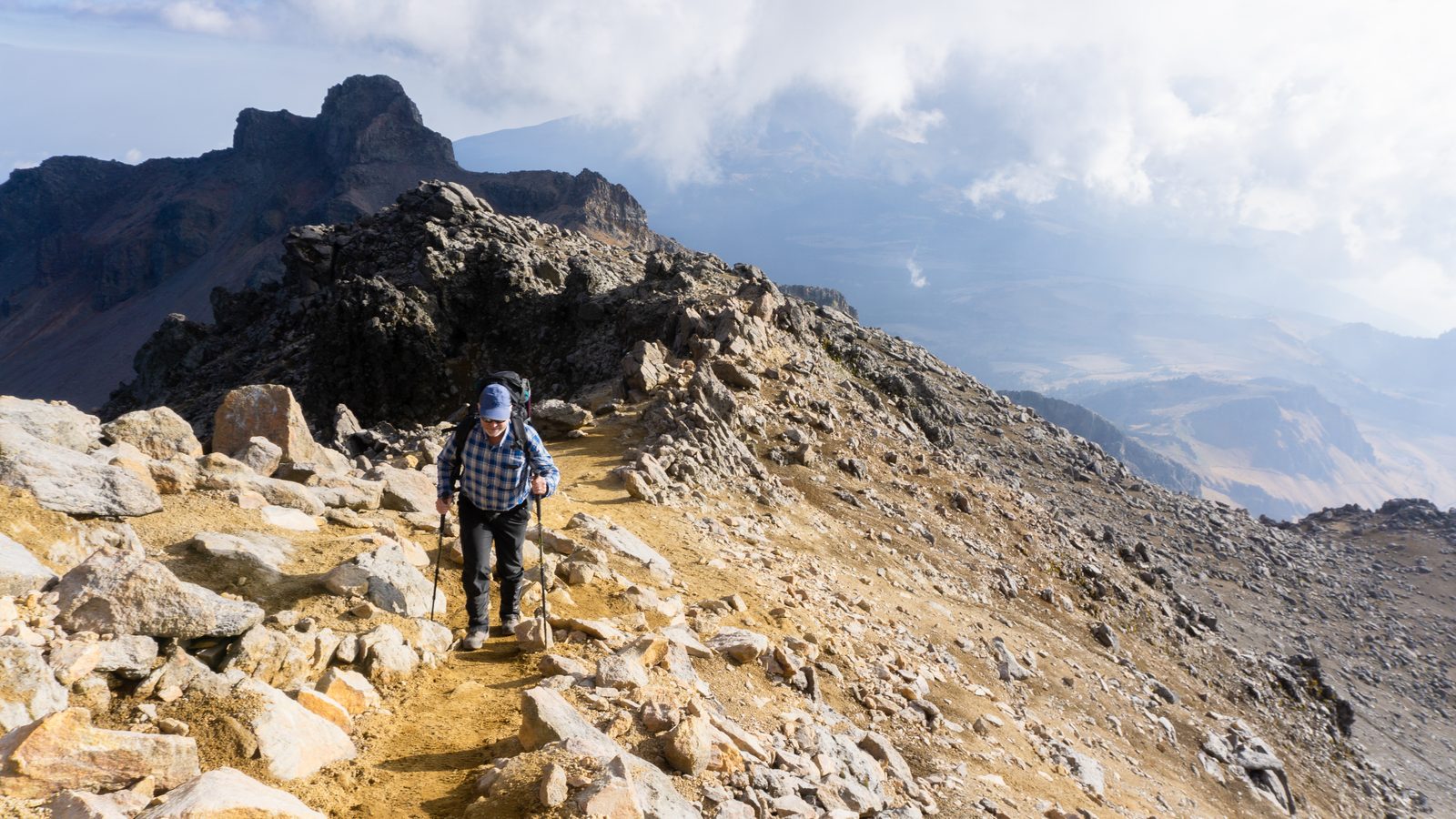
3. The 12 week plan for Pico de Orizaba
Orizaba is the one that needs a real block. If you have fewer than eight weeks and no recent long mountain days, tell us before you book. The honest answer may be a later date, or Iztaccihuatl first. The shape of the block is simple: the long day grows for three weeks, drops for one, grows again, peaks three to four weeks out, and then shrinks on purpose.
The long day, week by week
Bar length is the length of the long day. Pale bars are recovery and taper weeks, which are part of the plan, not a break from it.
| Weeks before the climb | The long uphill day | Hills or stairs | Also this week |
|---|---|---|---|
| 12 to 10 | 2 to 3 hours, 400 to 600 m of climbing, 5 kg in the pack | 45 min, no pack yet | 1 strength, 1 easy aerobic |
| 9 recovery week |
2 hours, light pack | 30 min, easy | 1 strength |
| 8 to 6 | 3 to 4.5 hours, 800 to 1,000 m, 8 kg | 60 min with the 8 kg pack | 1 strength, 1 easy aerobic |
| 5 recovery week |
2.5 hours, light pack | 30 min, easy | 1 strength |
| 4 and 3 | 5 to 6 hours, 1,200 m or more, 10 kg. One of these two is the test in section 6 | 60 min with pack | 1 strength, 1 easy aerobic |
| 2 | 3 hours, 600 m, 6 kg | 40 min, light | 1 strength, light |
| 1 | A 60 to 90 minute walk early in the week with a light pack, then nothing hard. Sleep. | None | Fly to Mexico City rested. Acclimatization starts when you land |
The last two weeks are a taper, and the taper is not you going soft. Across 27 studies of competitive athletes, the pattern that produced the best performance was a two-week taper that cut training volume by roughly half while keeping the intensity and the number of sessions[6]. That is exactly what weeks 2 and 1 do. The fitness you have three weeks out is the fitness you will climb with; the taper lets you use all of it.
The pack matters, and so does where the weight sits. Train with more than you will carry so that summit day feels light: on Orizaba you carry a daypack with water, food, layers, and your crampons and axe until you put them on, and ten kilos in training covers that with margin. Keep the load close to your back and use the hip belt; a kilo on your feet costs 7 to 10 percent more energy than the same kilo carried well on your back[7]. Which is also the argument for training in the boots you will climb in.
If you have climbed Rainier, Baker or a Colorado 14er in the last year, start this plan at week 8. The glacier skills carry over. The altitude does not, and we wrote about that step up separately.
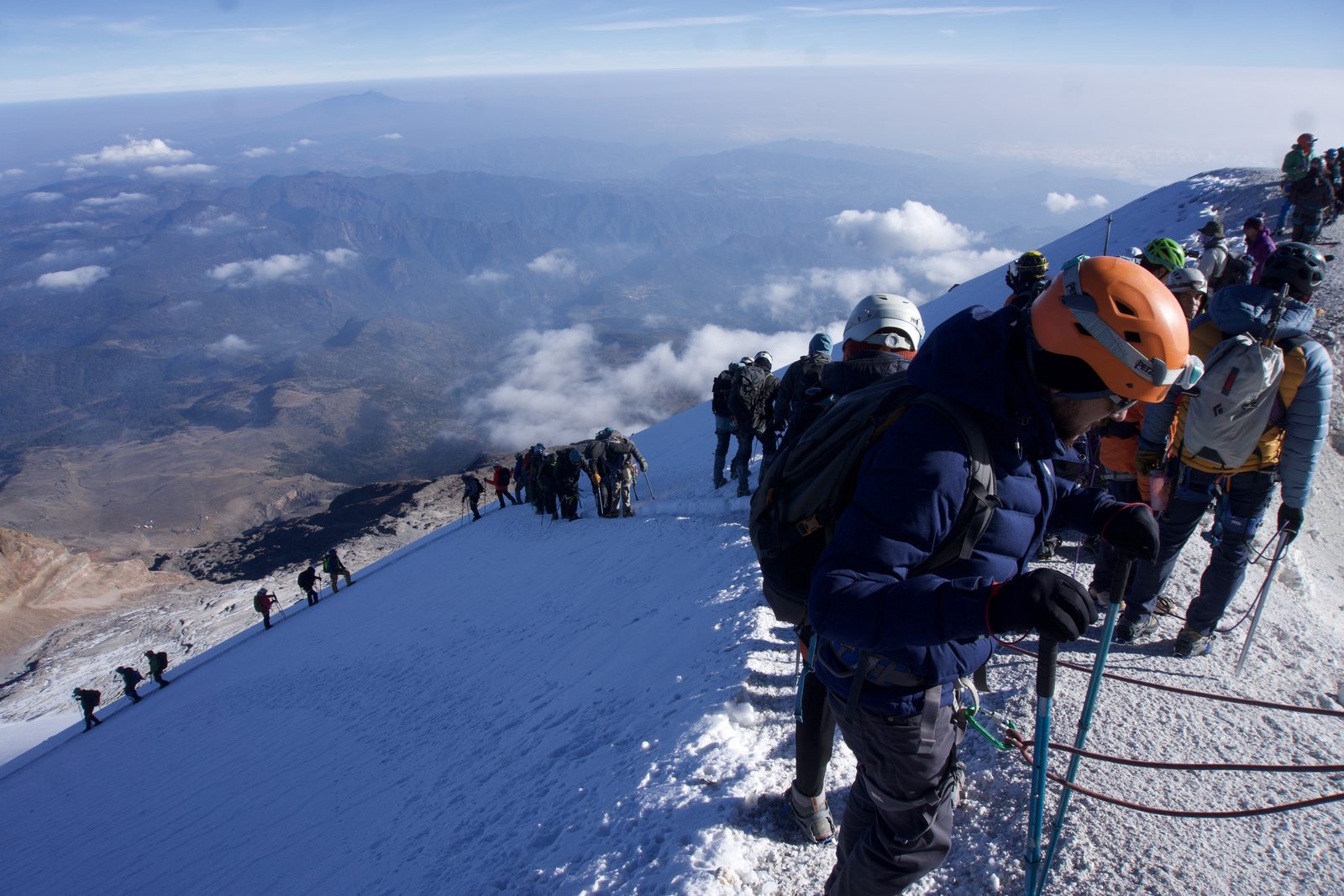
4. The 8 week plan for Iztaccihuatl
Izta is two long days back to back, and the second one starts before dawn at 4,700 m after a night that will not be your best sleep. The block is shorter than Orizaba's, but it has one thing Orizaba's does not: a second day on the weekend, so your legs learn to work when they are already tired.
The long day, week by week
From week 4, add a 90 minute hike the day before the long one. That second day is the point.
| Weeks before the climb | The long uphill day | Hills or stairs | Also this week |
|---|---|---|---|
| 8 to 6 | 2 to 3 hours, 500 m of climbing, 5 kg | 45 min | 1 strength, 1 easy aerobic |
| 5 and 4 | 3.5 to 4 hours, 800 to 1,000 m, 8 kg. In week 4, add a 90 minute hike the day before the long one | 60 min with the pack | 1 strength |
| 3 | 4.5 hours, 1,000 m, 8 kg, again with the 90 minute hike the day before. This is the test in section 6 | 60 min with the pack | 1 strength |
| 2 | 2.5 to 3 hours, 500 m, 5 kg | 40 min | 1 strength, light |
| 1 | A 60 to 90 minute walk early in the week, then rest | None | Arrive in Mexico City at least two days before |
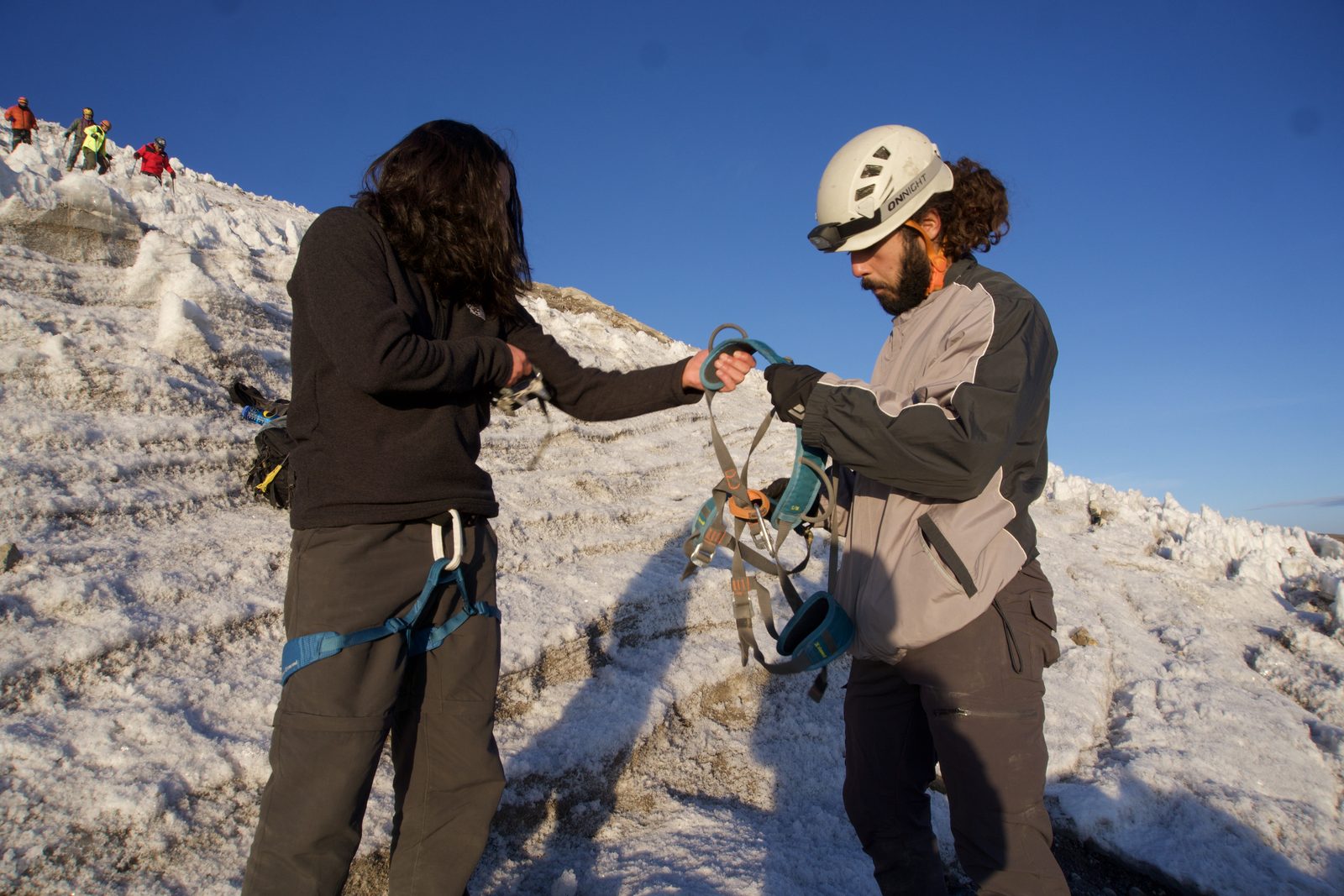
On Izta the rope, crampons and ice axe are standard, not a maybe: there is a glacier, and we teach you the gear on the mountain. That part does not need training. Your legs do. If you want a rehearsal, the Izta Refugio day hike reaches 4,780 m without the summit and is the best single practice day we have for this plan.
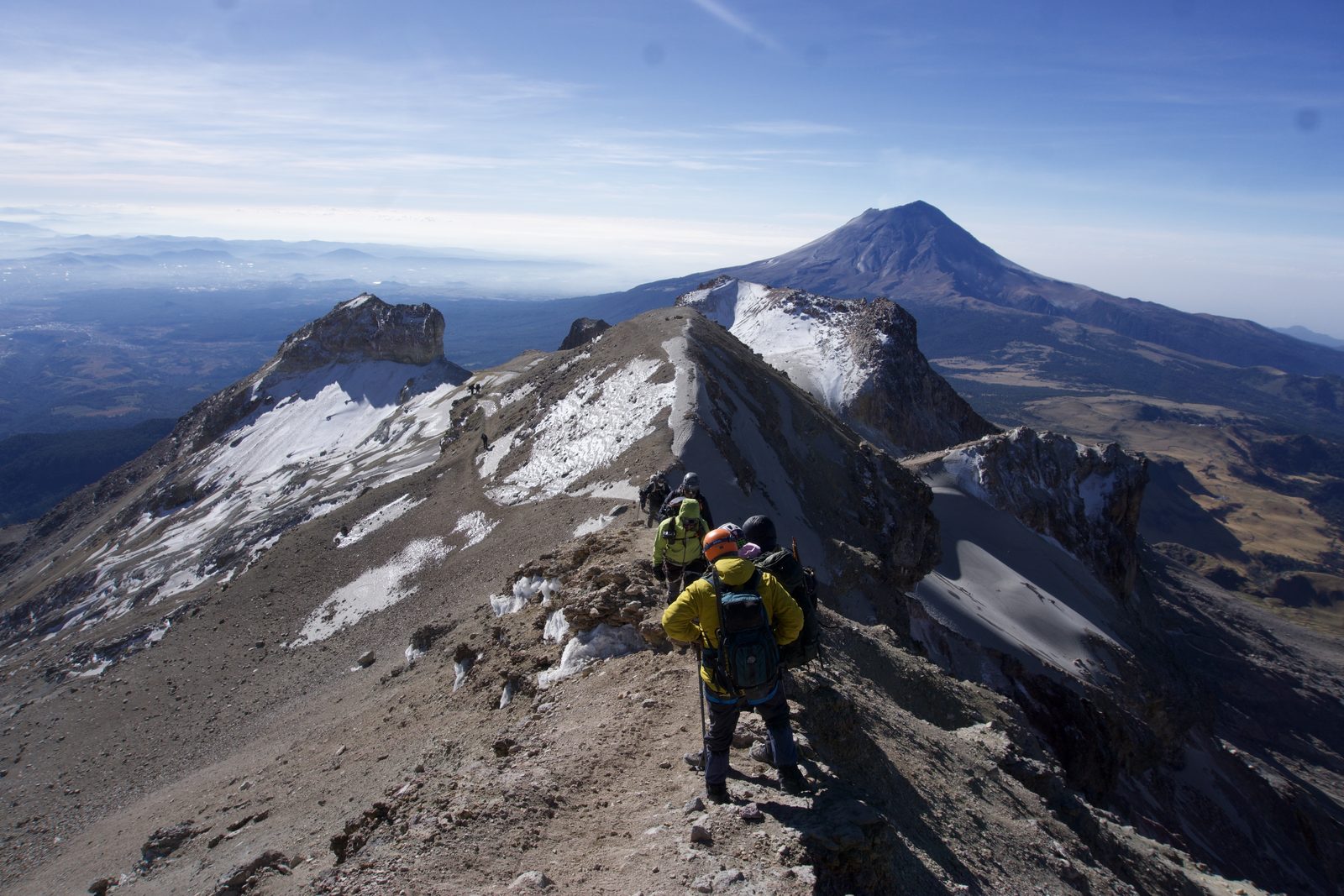
5. The 4 week plan for Ajusco and La Malinche
If you exercise three times a week, you are already fit enough for Ajusco. What you may be missing is the specific movement: three hours of walking uphill and back down is a different thing from an hour on a bike, and your calves will tell you so on Monday. Four weeks is enough to fix that.
The long day, week by week
Same scale as the Orizaba bars, so you can see how small this block is next to that one. For La Malinche make the week 2 hike 4 hours.
| Weeks before the hike | The long uphill day | Hills or stairs | Also this week |
|---|---|---|---|
| 4 and 3 | 2 hours, 400 m of climbing, a daypack | 30 min | Keep whatever you already do |
| 2 | 3 hours, 500 to 600 m, a daypack. For La Malinche, make this one 4 hours | 45 min | Keep it |
| 1 | A 60 minute walk, then rest | None | Arrive the day before. Ajusco is half a day from the city |
For most of our clients Ajusco or La Malinche is not the goal. It is the first rung: half a day at 3,880 m, two days after landing, before Izta or Orizaba. If that is you, you are not training for Ajusco. You are training for the big one and using Ajusco to acclimatize, so follow the plan for your main mountain.
6. The test: how you know you are ready
Three to four weeks out, do one long day shaped like summit day, and listen to what your body says the next morning. This is the only fitness test we care about. There is no number on a treadmill that tells us more.
| Mountain | The test | You passed if |
|---|---|---|
| Pico de Orizaba | 5 to 6 hours without stopping to recover, 1,200 m or more of climbing, 10 kg in the pack | You finish at a pace you could hold for two more hours, and the next day you walk normally |
| Iztaccihuatl | A 90 minute hike on Saturday, then 4 to 4.5 hours with 1,000 m and 8 kg on Sunday | Same: something left at the end, and Monday is stiff but fine |
| Ajusco and La Malinche | 3 hours with 500 m and a daypack | You would happily do another hour |
If you cannot do the test, say so. We would much rather move your date, or put Izta or the Refugio in front of Orizaba, than watch you turn around at 5,200 m. The honest message costs nothing. Turning around on the glacier costs the trip.
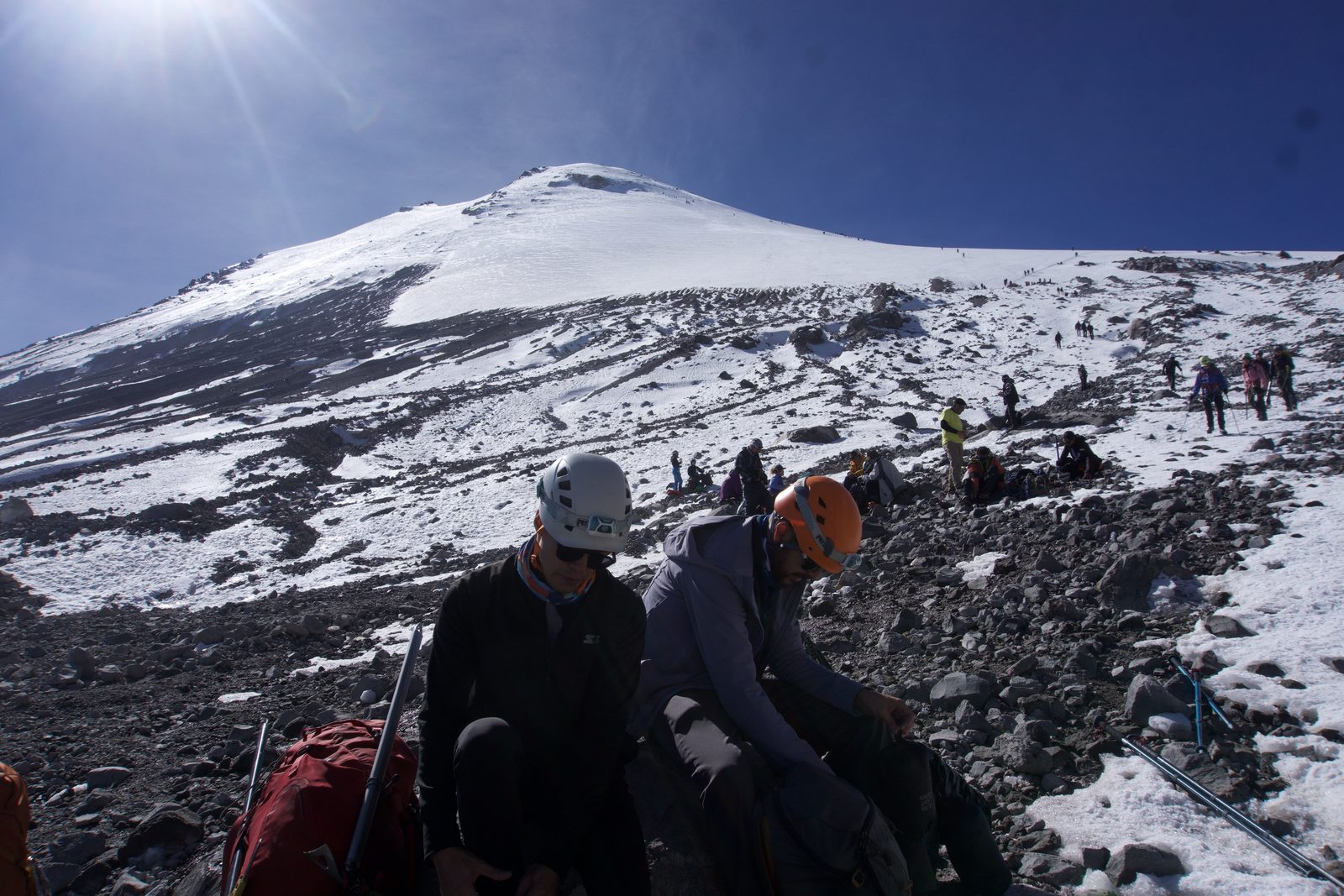
7. What training cannot buy: altitude
Fitness has almost no bearing on altitude sickness, and this is not a guide's opinion. The Wilderness Medical Society's current guidelines list rate of ascent, sleeping altitude and previous history as the risk factors that matter, and physical fitness is not among the things that protect you[1]. Susceptibility to mountain sickness was shown to be unrelated to fitness as far back as 1991[2], and a 2020 study found that endurance athletes were at higher risk of early symptoms at 3,450 m than untrained people, most likely because fitness lets you climb faster than you acclimatize[3]. We see the same thing on the mountain: the marathoner is the one with the headache at the hut.
The only training for altitude is arriving early and going up in steps: Mexico City at 2,240 m, a day on Ajusco or La Malinche, then Izta, then Orizaba. My own watch tracks acclimatization, and it tells me I am losing it every week I spend at home at 1,430 m, and I guide these mountains for a living. If you live at sea level, build the days into the trip, not into the training block. How the ladder works, and what to do if symptoms start, is in our altitude sickness guide. What to do with those first days in the city is in the acclimatization days post.
8. If you live somewhere flat
Most of our clients come from Boston, New York, Seattle or Amsterdam, and some have no hill within a hundred kilometres. The long day still happens. It just looks stranger.
- A stairwell. A 20 storey building is roughly 60 m of climbing. Ten laps is 600 m, twenty is a real long day. Walk down for the descent training, or take the elevator if your knees ask.
- A treadmill at 12 to 15 percent incline, walking, with the pack. Boring, and exactly right. Do not hold the rails.
- A stair machine for the midweek hill session. It does not replace the long day.
- The biggest overpass or parking ramp you can find, repeated, early, when nobody is around to ask.
- A weighted vest, if a pack in a gym feels absurd. It is the same load.
What does not replace it: a spin class, a 10K, a HIIT session. All good for the engine, all silent on the thing that fails.
9. How we use this on the mountain
We do not ask clients for a fitness test. We ask, in the intake form, what you do in a normal week and what your longest recent day looked like, and we read that against the mountain you booked. When the two do not match, we say so before you fly and suggest the rung in between. Our team has led more than 100 ascents on these peaks, and the ones that ended below the summit were almost never about strength. They were about reserve, and about the order in which people went up.
On Orizaba we guide two clients per guide, on Izta three, and the pace is set by the guide for the slowest person, on purpose. The training does not buy you a faster day. It buys you a day you can enjoy, with enough left to look at the sunrise from the crater rim instead of at your boots.
And yes, this is my own week: strength on Monday, an easy run on Tuesday, hills on Thursday, and on Sunday the long one with a pack, building from 90 minutes to four hours with ten kilos over eight weeks. It is the structure House and Johnston lay out in Training for the New Alpinism, cut down to what a working professional can actually keep[10]. I log it on a Garmin, and the two numbers I look at are hours on my feet and metres climbed. Pace is not one of them.
Tell us where you are in the plan
Send us your mountain, your dates, and what your longest recent day looked like. We will tell you honestly whether the time you have is enough, and what to put in front of the summit if it is not.
Message a guide on WhatsApp Altitude: the part training cannot buyThe trips: Pico de Orizaba · Iztaccihuatl · Izta Refugio day hike · La Malinche · Ajusco
Sources
The numbers in the plans (hours, metres, kilos, weeks) are our prescription for these three mountains, built on the principles below and on what we see with clients. The studies are what the principles rest on.
- Luks AM, Beidleman BA, Freer L, et al. Wilderness Medical Society Clinical Practice Guidelines for the Prevention, Diagnosis, and Treatment of Acute Altitude Illness: 2024 Update. Wilderness & Environmental Medicine, 2024. PubMed
- Milledge JS, et al. Acute mountain sickness susceptibility, fitness and hypoxic ventilatory response. European Respiratory Journal, 1991. PubMed
- Endurance athletes are at increased risk for early acute mountain sickness at 3450 m. Medicine & Science in Sports & Exercise, 2020. DOI
- Seiler S. What is best practice for training intensity and duration distribution in endurance athletes? International Journal of Sports Physiology and Performance, 2010. PubMed
- Rønnestad BR, Mujika I. Optimizing strength training for running and cycling endurance performance: a review. Scandinavian Journal of Medicine & Science in Sports, 2014. PubMed
- Bosquet L, Montpetit J, Arvisais D, Mujika I. Effects of tapering on performance: a meta-analysis. Medicine & Science in Sports & Exercise, 2007. DOI
- Knapik JJ, Reynolds KL, Harman E. Soldier load carriage: historical, physiological, biomechanical, and medical aspects. Military Medicine, 2004. PubMed
- Prevention of downhill walking-induced muscle damage by non-damaging downhill walking. PLOS ONE, 2017. DOI
- The effects of pre-conditioning on exercise-induced muscle damage: a systematic review and meta-analysis, 2023. PubMed
- House S, Johnston S. Training for the New Alpinism: A Manual for the Climber as Athlete. Patagonia Books, 2014.
- Uphill Athlete. Strength demos: box step-up and heel touch, box step-offs, general strength routine for mountaineers.


