Iztaccíhuatl: Summit or Refugio? The Two Izta Climbs Sold From Mexico City
If you search "Iztaccíhuatl climb from Mexico City", you get two very different trips under almost the same name. One is a long day hike to a metal hut at 4,780 m. The other is a two-day climb to the summit at 5,230 m, with a night at camp, a midnight start, and a rope. Both are sold as "climbing Iztaccíhuatl". They are not the same mountain day, and a lot of people find out which one they booked at the trailhead.
This post is the honest map. What each trip is, who it is for, and the one question to ask any operator before you pay.
01 · The two trips
Refugio de los Cien is not the summit
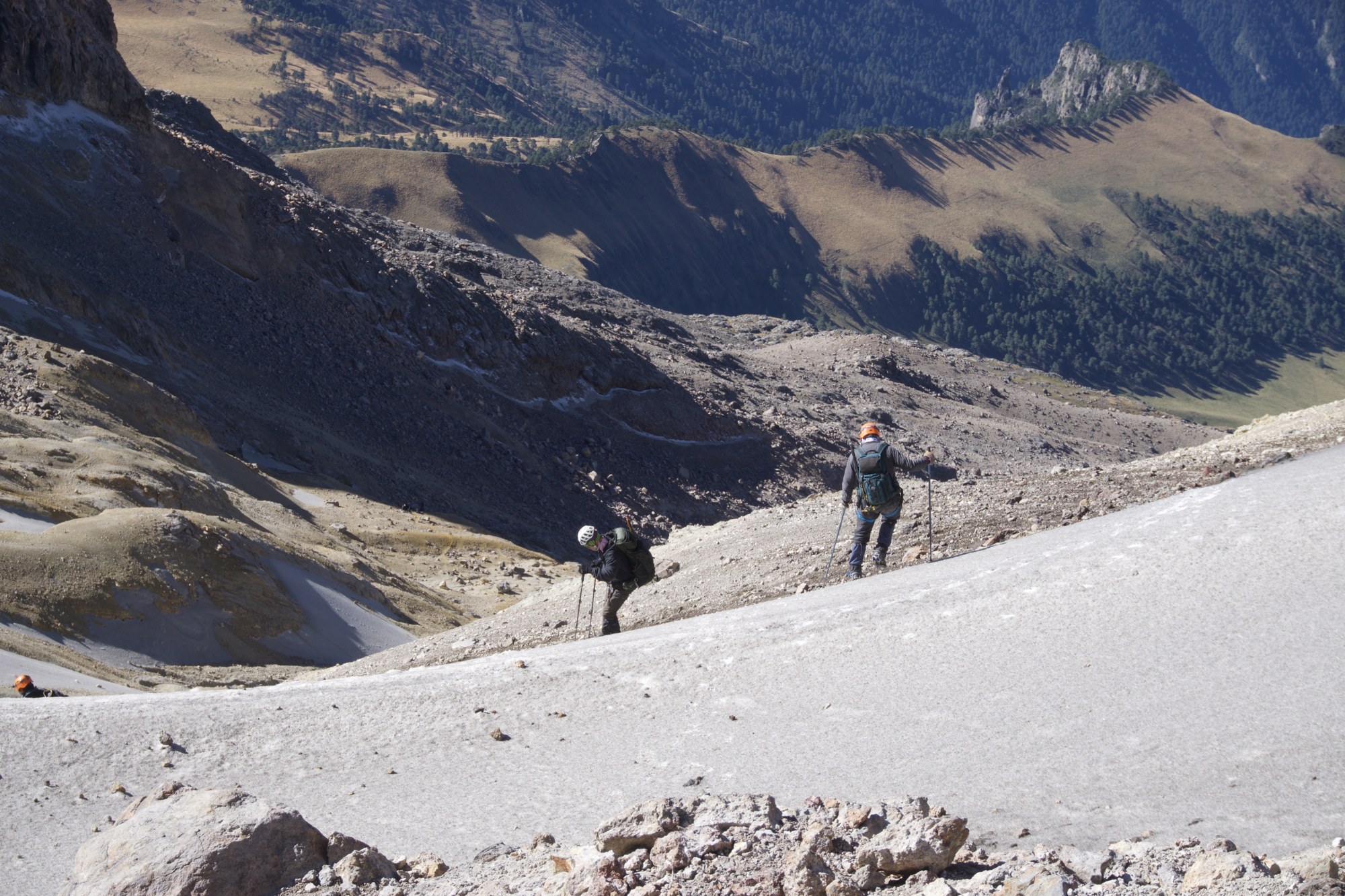
The Refugio de los Cien is a hut on Iztaccíhuatl at 4,780 m. Getting there is a one-day hike from Mexico City: pickup before dawn, up from the La Joya trailhead at 3,930 m, lunch at the hut with Popocatépetl across the valley, back in the city by evening. It is a serious day at altitude, and for many people flying in from sea level it is the first time they stand above 4,500 m.
The summit is a different animal. El Pecho, the true top of the Sleeping Woman, is at 5,230 m. From La Joya it is 8 to 10 hours of ridge work and scrambling to get there, which is why it is a two-day expedition: you sleep at camp, you leave at midnight, you are on the summit around sunrise, and you are back in Mexico City that night. Crampons, ice axe, helmet and harness come with you, and so does the rope.
| Refugio de los Cien | Iztaccíhuatl summit | |
|---|---|---|
| High point | 4,780 m, the hut | 5,230 m, El Pecho |
| Days | 1, from Mexico City | 2, camp at La Joya, 3,930 m |
| Start | Pickup before dawn | Day 2 at midnight |
| Terrain | Trail and rocky scree | Long ridge, scrambling, snow and ice near the top |
| Technical gear | None | Crampons, ice axe, helmet, harness, rope |
| Guide | Professional English-speaking guide | Same, three climbers to one guide, roped |
| Price, per person | 485 solo · 315 for 2 · 285 for 3+ | 635 solo · 435 for 2 · 375 for 3+ |
02 · Why the confusion exists
The same word sells two products
Most day tours to Iztaccíhuatl that you find on the big booking platforms go to the hut, or to a point on the ridge somewhere between 4,200 and 4,700 m, and come back down. That is a legitimate trip. It is a beautiful one. The problem is the label: it gets sold as "Iztaccíhuatl volcano climb" or "Izta summit hike", and a climber who trained for a 5,000 m peak arrives to find the day ends at a hut.
One of our September climbers arrived with a warning from the AI assistant he had used to plan his trip: don't accidentally book an "Iztaccíhuatl climb" that isn't a summit attempt, and use the words "El Pecho, 5,230 m" when you ask. Good advice. There are two summits in the marketing and one on the mountain.
The question to ask any operator: "What altitude do we turn around at, and is it El Pecho at 5,230 m?" If the answer is a number under 5,000, you are booking the hut. Nothing wrong with that, as long as you know.
03 · Which one is yours
The hut if you're testing altitude, the summit if you've done a mountain
Book the Refugio if you are flying in from sea level with a few days in Mexico City and you want to know how your body takes altitude before you commit to something bigger. It is the day we recommend as the first step for people who want Pico de Orizaba but have not been high recently. Trekking boots, layers, poles. No crampons.
Book the summit if you have already spent time above 4,000 m, you are fit enough for a 10-hour day, and you want a real mountaineering objective: camp, midnight start, crampons taught at camp the afternoon before, a rope team on the upper ridge. It is the natural step before Orizaba, and for a lot of our climbers it is the harder of the two days, because Izta is long.
If you do the summit, this is roughly how the two days go. Day one: pickup around 11:00, lunch in Amecameca, ranger check-in at Paso de Cortés, camp at La Joya by mid afternoon, a short acclimatization walk, dinner, lights out early. Day two: up at midnight, on the ridge by 00:45, the first scrambling around 4,700 m, sunrise near 5,000 m with Popocatépetl steaming on your right, summit around 08:30, back at camp early afternoon, celebration lunch, and Mexico City by evening. Those are typical times; your guide adjusts to the group and the weather.
04 · What we do differently
One person from your first question to the weather call
We are a small guide service based in Mexico City. The person who answers your first message about altitude is the one who reads your health form, briefs your guide and checks the weather the morning you go up. Your guide knows your name, where you are coming from and how much time you have had at altitude before you get out of the truck. We climb when the mountain allows and turn around when it does not; that call belongs to the guide, and it is the reason to climb with one.
Both trips leave from your accommodation in Mexico City and include transport, meals and water on the mountain, park fees and, on the summit climb, the camp and all the technical gear. Hotel nights and personal clothing are yours. If you are not sure which of the two is right for your dates and your background, write to us with where you live and what you have climbed, and you will get a straight answer.
Trip pages: Refugio de los Cien, one day · Iztaccíhuatl summit, two days · Pico de Orizaba. Prices are per person in USD, from the live trip pages, September 2026.

Prefer to Fill Out a Form?
We'll get back to you within 24 hours