
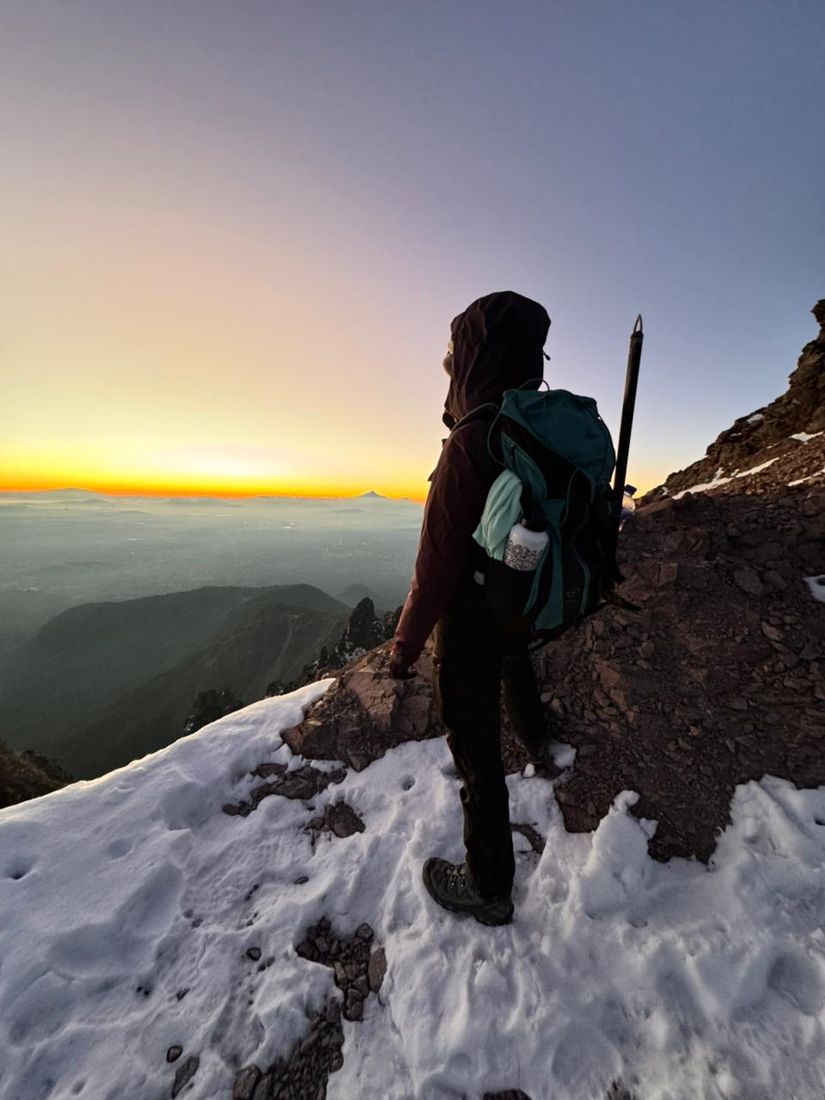
Plan 01 · 4 days
Via La Malinche
3,880 m→4,461 m→5,636 m
A real summit with no glacier on day two, then a night in a cabin near the mountain instead of driving back to the city.
$1,282Per person, 2 climbers
One goal: the highest point in Mexico. Everything in the days before it exists to put you on that summit instead of turning you around below it.
The schedule fails them, not their fitness.
People fly in for Pico de Orizaba, sleep two nights in Mexico City at 2,240 m, drive straight to the hut at 4,260 m and start climbing at midnight. They are strong enough. They are simply not acclimatized, and the mountain sends them down at the edge of the glacier.
Each plan on this page fixes the schedule. Every climbing day is higher than the last, with the same guide from the first morning to the summit, so by the time you step onto the Jamapa glacier your guide already knows how you move, how you eat and how you handle the dark.
All three end the same way: a night at the Piedra Grande hut and a 1 a.m. start onto the Jamapa glacier. What changes is how you get your body ready before it.
A real summit with no glacier on day two, then a night in a cabin near the mountain instead of driving back to the city.
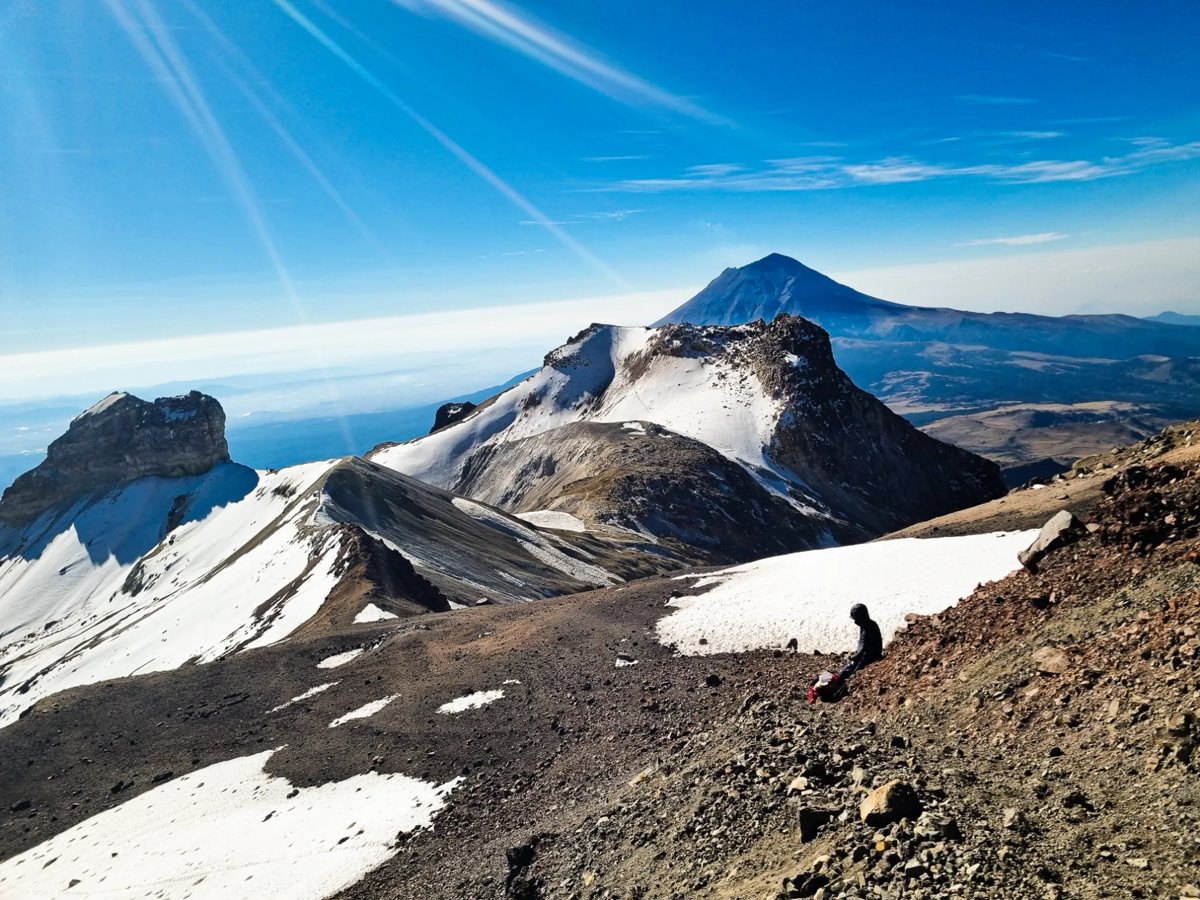
The highest you can walk near Mexico City in one push, on the shoulder of Iztaccíhuatl, the day before you head east.
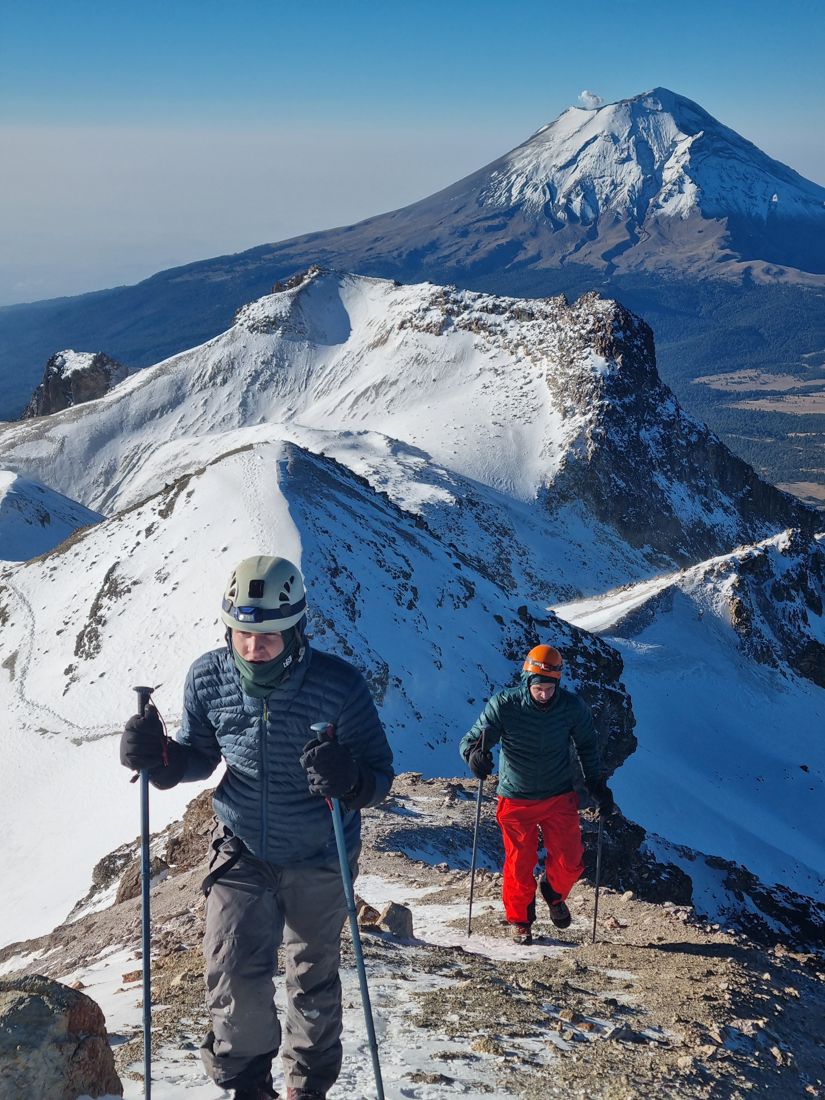
The full rehearsal: a night at camp, a midnight start, crampons and rope on Izta. If you can do Izta, you are ready for Pico.
Arriving already acclimatized from another range? Say so and we compress the plan and give you the days back.
Pickup is at your hotel in Mexico City. Every plan sleeps at the Piedra Grande hut the night before the summit.
Half a day on Mexico City's own mountain, up to Pico del Águila. You sleep in the city.
A full day to a real summit. You sleep in a cabin near the mountain, with dinner and breakfast, instead of driving back to Mexico City.
East to Tlachichuca, then 4x4 up the mountain road. No climbing today. You sleep at the hut.
A 1 a.m. start through the Labyrinth by headlamp, then onto the Jamapa glacier while it is still frozen. Guides are 2:1 on the glacier. Back to Mexico City the same day.
Half a day on Mexico City's own mountain, up to Pico del Águila. You sleep in the city.
A full day on the shoulder of Iztaccíhuatl and home the same night, with Popocatépetl venting across the pass.
From Mexico City east to Tlachichuca, then 4x4 up the mountain road. You sleep at the hut.
A 1 a.m. start through the Labyrinth by headlamp, then onto the Jamapa glacier while it is still frozen. Guides are 2:1 on the glacier. Back to Mexico City the same day.
Half a day on Mexico City's own mountain, up to Pico del Águila. Short, and it tells your guide exactly how you move before anything is at stake.
A full day to a real summit, and home the same night. Your first time above 4,000 m, on a different mountain, so Izta is new ground when you get there.
No guide, no mountain. Recovery, a gear check, and anything you still need to buy. We tell you where.
Camp at La Joya, then a midnight summit push. Crampons, rope, the whole rehearsal. If you can do Izta, you are ready for Pico.
East to Tlachichuca, then 4x4 up the mountain road. No climbing today. You sleep high and the altitude keeps working for you.
A 1 a.m. start through the Labyrinth by headlamp, then onto the Jamapa glacier while it is still frozen. Guides are 2:1 on the glacier. The highest point in Mexico.
On the four-day plans, every mountain is ten percent below its own published price. The seven days cost exactly what the four mountains cost on their own, and your rental gear comes included. Nothing is hidden: Ajusco, La Malinche, Izta Refugio, Iztaccíhuatl and Pico de Orizaba each have their own page and price, and you can add them up yourself.
Every figure is per person, in USD. The price depends on the size of the group: if someone drops out, it moves to the row above.
A booking fee of 35 percent confirms your dates and your guide, and comes off the total. The balance is due at the end of the expedition. Paying it in cash avoids the 5 percent card processing fee.
Your dates, which plan fits them and your climbing background. You get a real itinerary back, built for the days you are actually here, not a brochure.
Plan my climbPico de Orizaba is guided year-round, with November to March the prime window. Tell us the week you land and we build the days around it.