
Which Boots Do You Need for Pico de Orizaba?
Most climbers who write to us about Pico de Orizaba end up asking about boots. It's the right thing to worry about. Your boots are the one piece of kit that has to hold a crampon and keep your toes working for hours in the dark.
The short version. For the summit of Pico, our default is an insulated single mountaineering boot that takes crampons, like the La Sportiva Nepal Cube GTX or the Scarpa Mont Blanc Pro GTX. An uninsulated boot like the Aequilibrium ST GTX isn't what we recommend for the summit. If it's the only pair you have, send us a photo at least 7 days out, so your guide can decide while there's still time to rent. Double boots work too, but our gear list doesn't ask for them. Trail shoes and flexible hiking boots are for the warm-up hikes, not the glacier.
01 · The route
What Pico asks of a boot
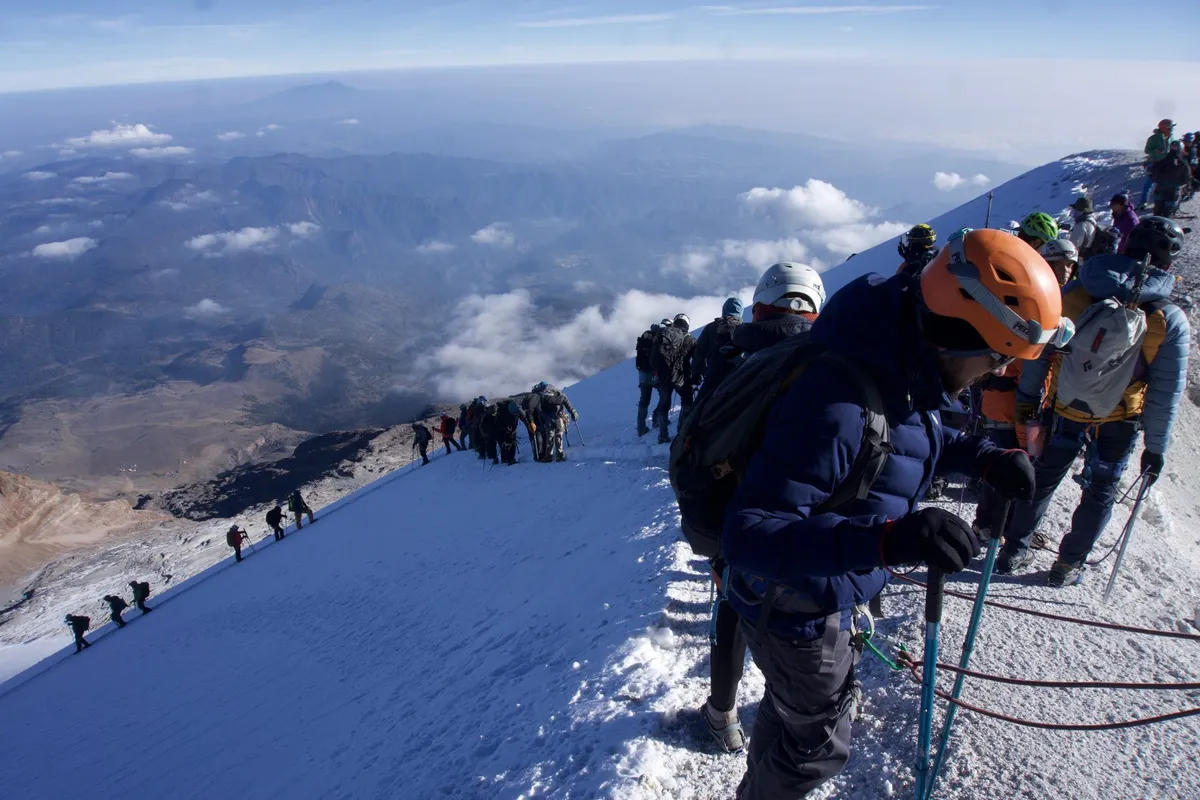
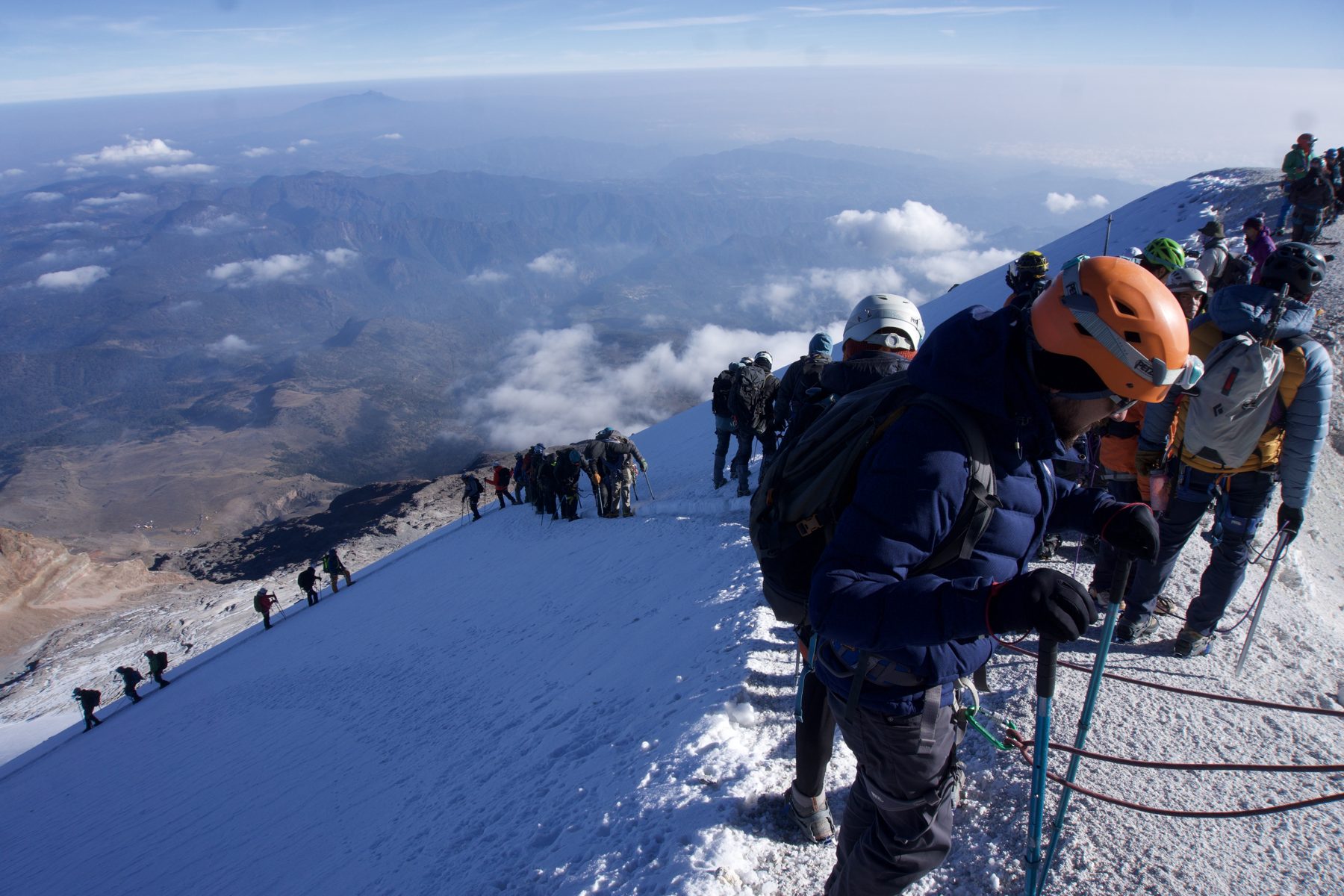
On our two-day climb you start around 1 am from the Piedra Grande hut at 4,260 m, at about minus 5°C. Around 2 am you reach the toe of the Jamapa glacier at 4,800 m, and the crampons go on. By about half past five you're near 5,400 m at about minus 10°C, on the hardest hour of the climb.1 Those are typical numbers from our itinerary, before wind. Summit temperatures usually run minus 5 to minus 15°C.
So a boot has three jobs. It has to hold a crampon on a steep slope, stay warm through hours of slow steps, and still feel fine on the long walk down. Our gear list says it in one line. Rigid sole, crampon-compatible, rated to minus 15°C.1
One catch. The maker pages we checked for this post don't print a temperature rating. So read the lining instead. "Insulated" in the specs means something, and a plain waterproof membrane means you're relying on socks and movement.
02 · The four kinds
What works and what doesn't
| Kind of boot | Examples | Pico summit |
|---|---|---|
| Trail shoes, flexible hiking boots | Whatever you hike in at home | No. Fine for warm-ups like Ajusco. A flexible sole isn't what our list asks for on a crampon route. |
| Light mountaineering boot, no insulation listed | La Sportiva Aequilibrium ST GTX, Trango Pro GTX | Not our pick. Only with your guide's yes at least 7 days out. La Sportiva pitches the Trango Pro at summer conditions.23 |
| Insulated single boot | La Sportiva Nepal Cube GTX, Scarpa Mont Blanc Pro GTX | Our default. Both list an insulated Gore-Tex lining and take crampons. La Sportiva names winter mountaineering as the Nepal's terrain.45 |
| Double boot | La Sportiva G2 Evo | Works, but more than we ask for. Built for high altitude in extreme temperatures. Reasonable if you get cold feet or you're training for something higher.6 |
You'll read online that Pico needs double boots. Some international programs do specify them, and others accept warm singles.7 We don't require them. If the outfitter you're comparing does, go by their list.
03 · The question we keep getting
Is the Aequilibrium ST GTX enough?
It's a good boot, and the Aequilibrium family is the one we hear about most. La Sportiva lists it at 630 g with a Gore-Tex Performance Comfort lining, and compatible with non-automatic and semi-automatic crampons. No insulation is mentioned.2 For comparison, the Nepal Cube GTX is listed at 894 g with an insulated lining.4
A climber on one of our Pico trips in October 2026 asked us exactly this. We said yes, sent semi-automatic crampons that fit that boot, and that climber reported a great summit day. The report didn't mention boots or feet, so it isn't proof, and one day in late October says nothing about a colder night.
Our answer is this.
- Bring it for the warm-up hikes either way.
- Use it for the summit only if your guide says yes after seeing the boot, your dates and your history with cold feet. Bring toe warmers as a backup, not as the plan.
- Otherwise reserve a rental at least 7 days out. Don't wait for the forecast, because sizing needs the week.
On socks, thick only helps if there's room. A sock that jams your toes against the boot makes your foot colder, so try your summit sock in the boot before you fly.
04 · The part people miss
Your sole decides your crampon
Crampons are included on every Pico climb with us, and we fit them to your boots.1 Which ones depends on your sole. If you wear US 13 or bigger, tell us early, because we need to confirm a crampon that fits.
- Automatic crampons have a metal bail at the toe and a lever at the heel. They need a stiff boot with a ledge at both ends.
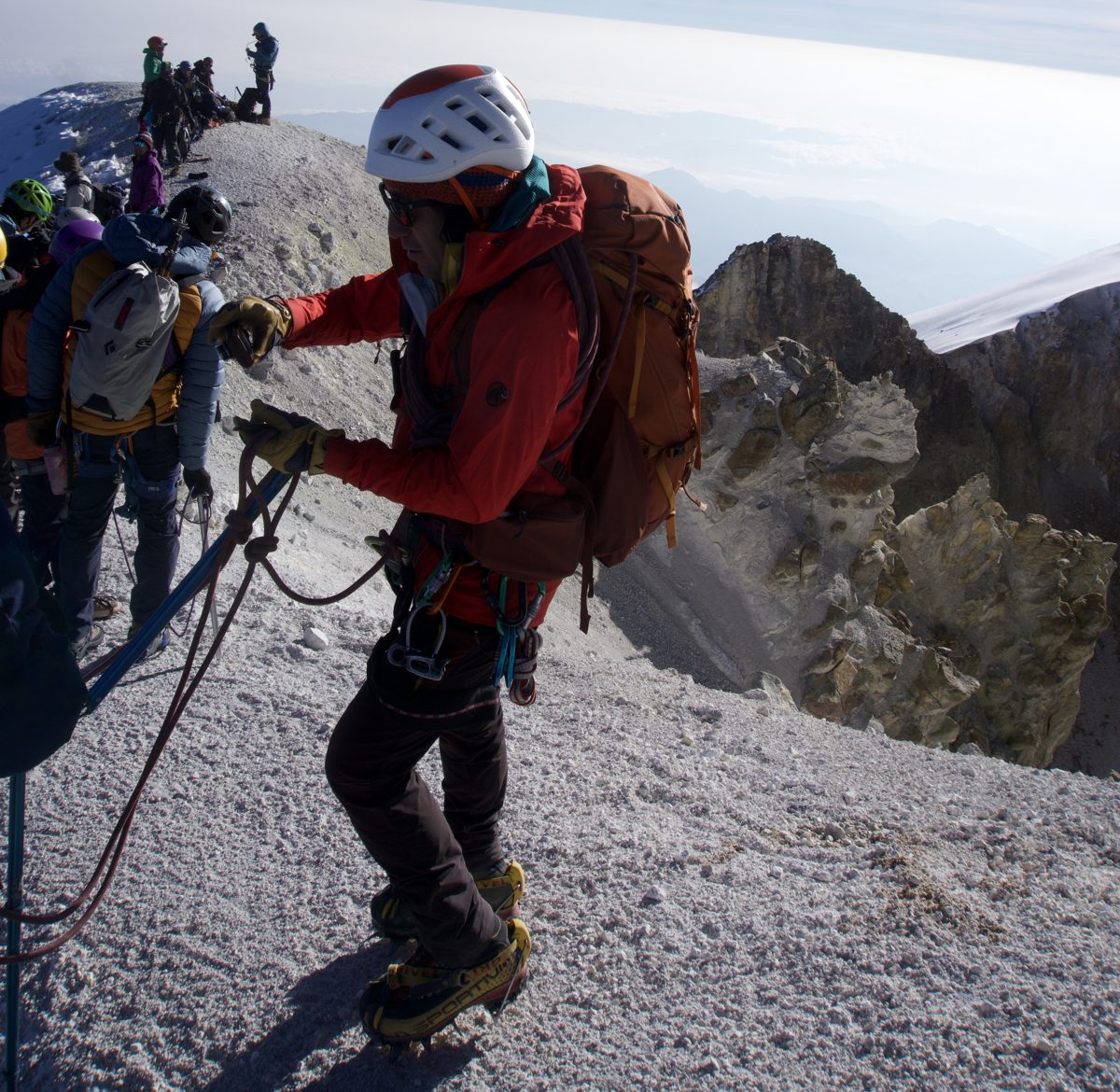
- Semi-automatic crampons have a plastic toe basket and a heel lever. They need a ledge at the heel only. That's what the Aequilibrium and Trango Pro pairs take.
- Universal strap crampons tie on at both ends and fit a wider range of boots.
A boot that looks right can still reject a specific crampon. It happened on a Pico trip of ours in October, when the pair packed for one climber didn't fit and the guide swapped in a universal pair from their own kit. La Sportiva says the same about the ST, that compatibility isn't assured and needs to be checked.2 That's why we ask for a photo of the boot and the sole before the trip. It's a 30-second message that saves a bad moment at the hut.
05 · The season
Decide early, then check the forecast
We guide Pico all year, and November to March is prime season. Crampons are on the itinerary whatever the month, so a crampon-ready boot is never optional. Warmth is the part that moves, and rentals need a week, so choose your boots early and lean warmer. Then watch the forecast by altitude for your dates. You can't add insulation at 5,400 m.
06 · Rent or buy
If you only need them once
We rent mountaineering boots to people climbing with us for $45 per trip of up to 4 days, as of November 2026. The rental page has the current list. Scarpa's US store lists the Mont Blanc Pro GTX at $649,5 so buying only makes sense if you'll use them again. And don't let summit day be their first day out of the box.
Two things before you decide. Reserve at least 7 days out, so we can get your size right. And if you wear US 13 or bigger, bring boots from home and tell us early, because shops here rarely carry those sizes.8
Not sure about yours? Send us a photo of the boot and the sole, plus your dates. We'll tell you if it works for your mountain.
Planning the rest of the climb? See our Pico de Orizaba trip, or why summit days start so early.
Sources
- Yacana Outdoors, Pico de Orizaba trip page, itinerary and gear list.
- La Sportiva, Aequilibrium ST GTX, product page.
- La Sportiva, Trango Pro GTX, product page.
- La Sportiva, Nepal Cube GTX, product page.
- Scarpa, Mont Blanc Pro GTX, product page.
- La Sportiva, G2 Evo, product page.
- Global Summit Guide, Pico de Orizaba gear list.
- Yacana Outdoors, equipment rental.


